Conventional and organic ginger supplies are steady, though logistics continue to prove challenging in moving it.
 Peru: As the largest grower of organic ginger, Peru has moved to virtually a year-round program now. “Peru grew a lot of ginger this season--estimates were that they grew double the amount of the year before,” says Kian Fattahi with Global Farms Enterprises in Los Angeles, CA.
China: “There’s a decent amount of Chinese ginger. The issue right now with Chinese ginger is it’s a little bit young and that’s reflected in its quality,” says Fattahi. “It’s not drying well and it’s about three to four weeks away from the quality being better.” In turn, young ginger needs to be sold more quickly than mature ginger which also pushes down the market pricing.
Brazil: “The season is wrapping up and overall the experience for everyone is that the quality wasn’t great this year. They think maybe there’s over planting on the same land,” says Fattahi.
Thailand: Thai ginger should arrive soon. “Typically if it’s mature enough, they start shipping at the end of December-early January. They put it on the water then and we see it from late January to probably around May,” says Fattahi.
The challenge this season is, of course, logistics. “With Thai ginger starting soon, the question is around shipping and transportation. We got a quote for LA from Thailand which was 75 days. That’s way too many days to put product on the water. Normally it’s three weeks,” says Fattahi. Ginger from Peru saw similar delays--normally Fattahi estimates it’s 12 days to get to the Port of Los Angeles plus a few days to clear it but right now it’s anywhere from 35-50 days.
To contend with these challenges, Global Farms has shifted its import strategy. “I’m not bringing in ginger through Los Angeles at the moment. I’m bringing everything through Miami and the Everglades because it’s so much faster,” he says. “It’s a necessary expense right now. It’s more expensive to bring it into Miami and I don’t get shipments every single week because there’s a lack of space.”
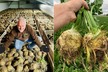
 Zia Fattahi and Kian Fattahi.
Good demand for ginger
This comes at a time when ginger demand is traditionally strong. “January and February are always popular months for ginger and demand was quite strong through the holidays. We fully expected it to let up a bit and it didn’t so we’re working hard to keep up with demand,” says Fattahi.
That said, pricing is lower currently than last year at this time. “Last year there was a Chinese ginger shortage and that pushed the price up on ginger from everywhere else. This year there’s still quite a bit of ginger coming from China,” he says.
Of course what is affecting prices are those increasingly expensive logistics. “Local ginger prices from any country we’re pulling from is not that expensive this year. The prices are quite good. But because of the transportation and logistics issues, that market hasn’t come off,” Fattahi notes.
That said, he anticipates pricing to stay stable for the next few months, though that will depend somewhat on weather conditions in Peru. “How much rain they have in the next few months could impact what ginger is left there for the season,” says Fattahi.
 For more information:
Kian Fattahi
Global Farms Enterprises
Tel: +1 (323) 415-6000
[email protected]
www.global-farms.com