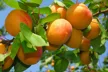
These days, if someone walks around the fields of Hellín and Tobarra, in Albacete, they will see a lot of apricot trees, but strikingly, below these trees, they will also see thousands of apricots scattered on the ground. What is the reason?
Jesús Sagredo, president of the cooperative Santiago Apóstol, of Isso, which brings together 145 producers from this district of Hellín, explained it. He said that the most affected variety has been the Bullida, which is consumed fresh, although it's mainly used by the canning industry for the production of high quality jams.
The president of this cooperative says that "this year, the fruit has been severely harmed by overproduction and hail." For this reason, he points out that it won't be possible to sell the apricots for fresh consumption. The issue is that the canning industry has its limits and only buys a given volume, so many of the producers in Hellín have been forced to leave them lying on the ground.
"It's a disgrace," says Jesús Sagredo, who estimates that more than 30% of the apricots they produce have been left on the ground. He also stresses that market prices have fallen to a "ridiculous" level, below the production costs, which is why the producer has chosen not to harvest its fruits.
For 2018, the apricot production had been expected to reach 5.5 million kilos, says the president of the cooperative Santiago Apóstol, of Isso. But due to a number of factors, in the end this figure will not exceed 3.2 million. Between 1.5 and 1.8 million kilos have been left on the ground; this translates into economic losses estimated at more than 800,000 Euro, taking into account that the price per kilo stands at 45 cents.
"Cooperatives and individual producers will suffer significant losses, and the revenues will be greatly reduced in the whole region, not only in the field, but in all sectors. The work of a whole year has been wasted," says Jesús Sagredo. However, the president of the cooperative hopes that other stone fruits grown in the area, such as peaches, which are harvested later, will have better luck.
Source: abc.es