Lars Anke during the 2017 East Asia Seaport Alliance Assembly in Qingdao in September - Photo: HHM
The position of the Port of Hamburg as the most important port for the trade between Europe and China and its pioneering role worldwide in dealing with digitization was met with great interest by the audience. The audience mainly existed of representatives of large Chinese seaports and many companies specialized in the Chinese foreign trade.
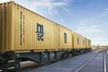
Lars Anke showed the smartPORT-approach, especially with regard to traffic management in the Port of Hamburg area and he explained the resulting advantages in efficiency. He focused on the connection of the terminals to rail transport and the importance of Hamburg as the largest railway port in Europe.
China is the most important trading partner of the Port of Hamburg. In 2016 more than 24 million metric tons of sea freight with an origin or destination in China were handled in Hamburg, including 2.6 million TEU. Every week about 20 liner services connect the German port to China. And as part of the 21st-century Maritime Silk Road, also known as the One Belt and One Road-Initiative, 177 container connections are now offered between Hamburg and China every week.
Qingdao is one of the most important ports in the north of China and it is a stop on the route of liner services from Hamburg several times per week. During the previous years the port has significantly increased its capacity for containers, coal and ore. Great emphasis was put upon the use of new technology and efficiency-improving measures in the seaport-hinterland connections.
For more information: Port of Hamburg