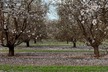
Many almond growers are gambling that self-fertile almond trees will save enough from a reduced need for bees — and the ability to uniformly harvest and manage orchards of a single variety — to compensate for prices that may be lower than for the popular standard Nonpareil.
The leading self-fertile almond , "Independence" has already become the second most widely planted variety in recent years, and additional self-fertiles are showing well in preliminary trials, as growers look to simplify orchard management.
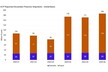
“Independence went from 11 percent of new planting in 2014 up to a full 25 percent in 2016,” said Dani Lightle, University of California Cooperative Extension farm adviser based in Glenn County. “This is a huge change, and it could represent where we are going as an industry.”
Self-fertile almonds offer insurance against the high and uncertain price of bees for pollination, but they also greatly simplify management because all the trees in the orchard have uniform hull split and harvest schedules.
“The Independence system requires fewer bees; some growers go down to a half hive an acre,” Lightle said. “You also only have to harvest once, and you have hull split at the same time, which means you only have to spray once.”
Unfortunately, she said, there is no way of knowing what price Independence nuts will bring compared to the standard Nonpareil in the long run, and almond growers usually leave their trees in the ground for about 25 years.