Growing organic food market in Germany
Today, about 95 percent of the food sold in Germany - as measured by retail sales value - isn't organic. That's despite the fact that total organic food sales in Germany have been growing steadily for years. Sales growth has reached an impressive 10 percent per annum over the last couple of years.
But most food continues to be produced with the help of a variety of synthetic pesticides, herbicides, and fertilizers. The consequences, according to organic farmers and many environmental scientists, include depleted soils, reduced biodiversity, polluted waters, and inhumane treatment of farm animals.
Today the princes of Europe often eat organic food, and the paupers generally don't. That's because organic food - called "bio" in Germany - is more expensive than food produced using lower-cost "conventional" farming systems.
"Bio" products typically cost anywhere from 15 to 100 percent more than non-organic, according to Alexander Beck, an organic farmer who heads up Germany's Association of Organic Food Processors.
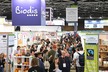
Lifestyle, cultural and educational background help determine whether or not people buy organic food; price isn't the only factor. But it is the dominant factor, and one that is not likely to change, according to some industry insiders at Biofach.
source: dw.com