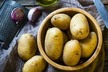
The CGIAR Research Program on Climate Change, Agriculture and Food Security (CCAFS), initiated a study aimed at developing more resilient potato varieties that can grow in both long and short rainy seasons and give higher yields in certain villages in Tanzania.
The study, initiated in 2013, was led by the International Potato Center (CIP) in partnership with Selian Agricultural Research Institute (SARI), Lushoto District Agriculture, Irrigation and Livestock Cooperatives Office (DAICO), YARA Tanzania Limited, Japan International Cooperation Agency (JICA), local Non-Governmental Organizations (NGOs) and Lushoto farmers.
Based on demand by Lushoto farmers, this participatory action research (PAR) also sought to develop potato varieties with better culinary traits.
The data collected from three seasons of field evaluations showed a certain consistency in the high yielding ability of four genotypes: Asante, Shangii, CIP392797.22 and CIP398208.29. Two clones were named through a stepwise and participatory approach and proposed for official release. Findings are presented in a recently published working paper entitled Participatory Evaluation of Resilient Potato Varieties in Climate-Smart Villages of Lushoto in Tanzania.
source: ccafs.cgiar.org