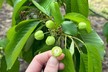
On sandy terrain northeast of Tomah, in the heart of cranberry country, Wisconsin, rows of short shrubs called aronia have reached two feet in height. Adam Nemitz, who planted the bushes two years ago, says they are “in their infancy,” but the more vigorous bushes have already started to bear aronia fruits – clusters of blue-black berries with a passing resemblance to large blueberries.
When the bushes reach eight feet in height, each can bear about 20 pounds of a fruit that is sometimes touted, in this nutrition-conscious era, as the “next superfruit.”
The optimist would hope we are looking at Wisconsin’s next specialty crop; but the realist would see a 20-acre experiment with an uncertain future.
Nemitz first heard of aronia in 2013 from a fruit-grower’s magazine. “I did not know what aronia was, so I did some research,” he says. “It is machine harvestable, and that piqued my interest, and I always wanted to diversify.”
His farm, the JR Nemitz Cranberry Co., Inc., has 83 acres of cranberry marshes, part of a Wisconsin industry that is the nation’s largest. Yields have benefited from the introduction of several varieties developed at UW–Madison, but abundant harvests have put downward pressure on prices since the 1990s.
The experiment with aronia was a business decision, Nemitz says. “I wanted to spread the risk with another crop; we already had the land, so there was not a lot of investment to get started.”
Several other growers in the area have planted aronia, but the market for aronia remains undeveloped, Nemitz says.
As Midwest farmers discuss forming a cooperative to promote aronia, they accept that the crop’s success will depend on marketing, which in turn will rely on letting people know the health benefits of a flavorful fruit that grows on native shrubs once called chokeberries. “I usually hear the taste described as astringent and/or earthy,” says Nemitz, “with a hint of sweet in the first bites and an earthy finish.”
Read more at: news.wisc.edu