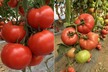
According to Christian Solli, environmental systems analyst at Asplan Viak AS, "greenhouse tomatoes produced in Norway in winter have a footprint in the order of 3.5 kg CO2, while their Spanish counterparts reach just between 300-600 grams."
Many Norwegian greenhouse growers plant the tomatoes on peat, which releases stored carbon, but most importantly, the heating systems used works mostly with fossil fuels.
Anders Sand, energy adviser at the Norwegian Growers Association, is currently working to restructure the industry.
He says that with the construction of the gas pipeline from the North Sea over Jæren, it was assumed that the greenhouses there would use gas. Now, however, most greenhouses in Norway make use of a blend of fossil fuels and electricity for heating and only three greenhouses have adopted the technology that stores energy in the water.
Ten times worse
Life cycle analyses of foods show that Norwegian greenhouse tomatoes may have a greater CO2 footprint than salmon and chicken.
Meanwhile, tomatoes from Spain, Morocco and the United States can be produced naturally in the winter. Transport represents a small impact compared with the footprint of the greenhouse production itself.
"In the worst case scenario, the carbon footprint of Norwegian tomatoes could be as much as ten times worse than that of imported tomatoes from Spain," affirms Mr Solli. "It is of course better to produce tomatoes in a place where heat and light are free."
In any case, Anders Sand believes that Norway can change this, since the country is overflowing with renewable energy, such as biofuels and water, and that all fossil fuels can easily be phased out in favour of renewable sources in the long term.
"It's just a matter of economics; there is enough technology available," affirms Sand.
For the record, vegetables and fruit grown with natural light and heat in Norway, including field grown tomatoes, are obviously one of the most climate-friendly Norwegian people can eat. On average, every Norwegian eats about 7 kilos of tomatoes per year.
Source: nrk.no