Canned products don't normally attract much attention, but they are also considered essential in any pantry. They are one of those affordable luxuries that, perhaps because of their moderate price and our being accustomed to seeing them on the shelves, we do not fully appreciate.
Canned vegetables also deserve the spotlight. We are talking, of course, of those of great quality.
While the autumn and winter are usually associated with a quiet period in agriculture, this is far from the truth in Navarra, where the pepper, chard, asparagus and artichoke seasons take place in succession.
When it comes to red Piquillo peppers with a Designation of Origin of Lodosa, the harvesting is carried out manually when the pepper has reached the perfect size (8 to 10 centimetres) and a deep red colour. There are also green peppers, which are actually more easily digested, as well as streaked ones, but they are not included in the PDO.
This pepper variety has two or three sides and ends in a point, which gives it its name (piquillo = little point). The plants yield about 15,000 kilos per hectare, and due to them severely exhausting land, the grower needs to let the field rest every 2 or 3 years and switch to other crops. It is harvested in several stages to ensure the optimum ripeness of these peppers that need heat and sun, but not too much; with temperatures higher than 30 degrees Celsius, the plant does not perform well.
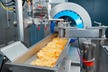
Once in the canning facilities, the process of roasting and peeling the peppers is also done manually. Even though the productivity level has made it necessary to introduce some mechanised processes, in the end dozens of women are the ones in charge of peeling, selecting and canning the best ones.
According to the manager of Conservas Pedro Luis, the key is that no water is used to facilitate the peeling process; it is done in dry conditions, which helps preserve the flavour and quality of the pepper. After washing, once brought from the field, they are pricked for roasting and passed through a machine that performs an initial pat-based peeling. In the next stage, the stalk and most of the seeds are removed.
From that point, the workers are in charge of peeling off and removing any remaining seeds, as well as of selecting and placing the peppers in cans. From each kilo of good raw peppers, half a kilo of roasted peppers ready for canning is produced.
Is any liquid or oil added? No, just a pill to regulate the PH, as required by European regulations; and, indeed, the PDO prohibits any seasoning. The peppers are placed "as is" in the can or bottle, so the liquid we may come across will have been released by the product itself.
Unlike what happens with canned fish in oil, this product does not change over time. Its consumption is recommended within about 5 years after the date of packaging which, as we have seen, takes place shortly after they have been harvested from the field.
Regarding their taste, the truth is that Piquillo peppers do not need much introduction. The list of recipes (raw, with a little oil, stuffed as part of a dish, to make sauces, like ketchup, etc) is endless, although the to-do list includes coming up with some more.
In any case, and as usually happens when we become aware of all the work needed for a product like this, it is easy to see that the price is actually very moderate; it seems almost a bargain. Since we spend so much time insisting on the fact that the basis of good cooking is the quality of the raw materials, we can be sure that there's nothing better than going for products like this one.
Source: blogs.20minutos.es