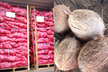
Andalusia's Councillor of Agriculture, Elena Víboras, opened the 2nd Territorial Meeting of Malaga's Agro-food Sector, dedicated to subtropical fruits, and organised Diario Sur. Víboras stressed that Andalusia's subtropical fruits generate between 150 and 200 million Euro per year.
Currently, Andalusia has 16,000 hectares of subtropical crops, with the most extended being avocados, cherimoyas and mangoes. Víboras explained that "they are products with great potential, increasingly consumed, not only because of their healthy qualities, but also due to the interest shown in new gastronomic options."
The Councillor of Agriculture also mentioned the challenges that the sector is facing, more specifically those of the growers in the Tropical Coast. The first is the structuring and organisation of supply, as "together we are stronger, and together we are more competitive." At present, there are only about half a dozen fruit and vegetable producer organisations (OPFH) involved in tropical fruit trade, representing less than 20% of Andalusia's total production volume.
In this sense, Víboras stressed that greater organisation around OPFH's "would benefit producers, as they would obtain a better share of the value generated in trade, and would allow them access to more European aid." Stronger and larger producer organisations "may achieve a better position in the international markets, more easily addressing the need to innovate and improve the quality and marketing strategies," said the Councillor.
The second challenge that the subtropical fruit sector must face is to advance in its professionalization, with better sized and organised farms. The third is a commitment to quality and differentiation, pursuing a designation of origin. This, according to Víboras, "would allow the sector to gain relevance and to have access to aid for promotion."
The last challenge for the sector is to improve its access to water for irrigation, to which end the Central Government has plans for the building of new infrastructure.
To address all of these challenges, the Councillor stressed that the Andalusian Government provides the sector and its growers with numerous tools. These include the new Rural Development Plan (RDP) for 2014-2020, one of the cornerstones of the new Common Agricultural Policy (CAP).
Despite the funding cuts for Andalusia introduced by the Ministry of Agriculture, Food and Environment, Víboras stressed that basic aspects at the core of the RDP are "modernisation, generational change and the creation of added value for both the producers and the region."