The 2013/14 Italian pear campaign was heavily affected by scalding. "Damage for stored produce has been assessed at around 30%, corresponding to over €60 million. Losses are huge and they deeply affect growers, who still lack a viable alternative to store pears," explains Simona Rubbi from the Cso.
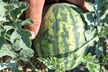
Superficial scalding (Photo Diproval - Unibo).
The problem arose from the fact that the new European regulation eliminated a series of active ingredients that were normally used, including ethoxiquin (an anti-scalding substance).
On 16th May 2014, Davide Vernocchi, chairman of ApoConerpo, Massimo Passanti and Vanni Girotti, deputy chairmen of Conserve Italia, ApoConerpo administrators Roberto Cera, Raffaele Drei, Adriano Aldrovrandi, and director Gabriele Chiesa, met the Ministry for Agricultural Policy Maurizio Martina to talk about the problem.
Until 2013, the companies managed to use the ethoxyquin they still had stored, but now, only the authorisation of the Ministry of Health could allow its use. "This is what Spanish and Portuguese producers have asked and obtained. At the moment, therefore, not all competitors have the same means even though they are all part of the European Union," explains Rubbi.
What is weird is that using ethoxyquin is prohibited in Italy, but the country still imports pears from countries that use it. It must also be reminded that residues on imported fruit are within the law, as sunlight is enough to eliminate any trace of ethoxyquin. What is more, people usually peel pears before eating them.
Researchers are currently working on alternatives and, in some cases, active ingredient (1-MCP) is used. However, it is quite expensive, more difficult to use and can affect the quality of the produce as it slows down ripening. This is not a problem in Northern Europe, as people still buy pears, but Italians tend not to buy produce if it's nor fully ripe.
The Minister of Agriculture Martina is committed to meeting the Minister of Health Lorenzin at the beginning of June to agree on a strategy to avoid what happened during this campaign.
Until 2013, the companies managed to use the ethoxyquin they still had stored, but now, only the authorisation of the Ministry of Health could allow its use. "This is what Spanish and Portuguese producers have asked and obtained. At the moment, therefore, not all competitors have the same means even though they are all part of the European Union," explains Rubbi.
What is weird is that using ethoxyquin is prohibited in Italy, but the country still imports pears from countries that use it. It must also be reminded that residues on imported fruit are within the law, as sunlight is enough to eliminate any trace of ethoxyquin. What is more, people usually peel pears before eating them.
Researchers are currently working on alternatives and, in some cases, active ingredient (1-MCP) is used. However, it is quite expensive, more difficult to use and can affect the quality of the produce as it slows down ripening. This is not a problem in Northern Europe, as people still buy pears, but Italians tend not to buy produce if it's nor fully ripe.
The Minister of Agriculture Martina is committed to meeting the Minister of Health Lorenzin at the beginning of June to agree on a strategy to avoid what happened during this campaign.