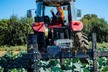
The acreage cultivated making use of Integrated Production techniques in the Spanish Region of Valencia has reached 46,859 hectares in 2013, according to data from the Council of Agriculture, Fisheries, Food and Water.
This is the result of the decision from a total of 4,819 owners of agricultural holdings to opt for this form of agriculture focused on obtaining high quality, healthy products by means of applying agricultural and pest control techniques based on biological processes that reduce their impact on the environment.
By-products, the most relevant sector in terms of acreage making use of Integrated Production techniques is that of citrus, with 3,374 growers and 29,634 hectares. In second place, their implantation is also noteworthy in the cultivation of grapes. In this case, 1,424 growers are registered, owning a total of 17,194 hectares. This model uses methods that take into account the crop's profitability and the protection of the environment. This is why the aim is to reduce the use of chemicals and to incorporate integrated techniques for the prevention and control of pests and diseases. In addition to citrus and grapes, Integrated Production is also used with medlars, olives, rice, tomatoes, peppers, brassicas and melons.
What Integrated Production aims to achieve is a profitable agricultural model, with quality products obtained in an environmentally friendly manner. To do this, it maximises the use of resources and natural mechanisms to ensure a viable agricultural system in the long term.
It also integrates all cultural practices to be applied on the crop, such as the preparation of the land, the sowing, fertilisation, irrigation, pruning, etc., with the fight against pests and diseases. It is consequently aimed to limit their effects and maintain those practices within acceptable levels for the crop at hand, with the goal of making agricultural exploitations more sustainable.
Source: gva
Source: gva