Oklahamo growers on the lookout for spotted wing drosophila
“Spotted wing drosophila was first detected in the United States in California in 2008, where it eventually spread north to British Columbia and south all the way to Florida,” said Phil Mulder, EPP department head. “As recently as 2012, SWD was confirmed in Arkansas, Colorado, Idaho, Illinois, Indiana, Iowa, Kentucky and Minnesota.”
“What makes SWD potentially more economically important than other fruit flies is its ability to cut into intact fruit, using their serrated ovipositor to inject eggs under the skin,” said Eric Rebek, OSU Extension entomologist. “This allows the subsequent larval stage to be present during ripening and can lead to detection in ripe fruit after harvest.”
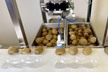
Oklahoma fruit growers are being advised to be on the lookout for the fly, which includes setting up a trap. Simple traps can be established with apple cider vinegar.
“Once SWD have been detected, management activities should begin immediately,” said Jackie Lee, pesticide coordinator for the Division of Agricultural Sciences and Natural Resources at OSU. “From a cultural standpoint, growers can minimize the population buildup by harvesting on time and removing overripe fruit and wild hosts such as wild grape, raspberry and blackberry from nearby locations.”
If an insecticide is applied for control, selection should be based on several factors including harvest date, re-entry restrictions, impact on existing Integrated Pest Management (IPM) programs, beneficial insects and environmental conditions.
“Irrespective of the choice of insecticide, it is imperative growers strictly follow restrictions regarding harvest and re-entry,” Lee said. “In addition, it is also important to rotate between the various chemical classes to avoid development of insecticide resistance.”
Source: edmondsun.com