Fruit crops coming on strong in California
While a few shipping houses are already finished for the year, many others will be busy until late June or early July, said Paul Story, director of grower services for California Citrus Mutual.
"I think the latter half went pretty well," Story said of the navel harvest, which typically starts in late October and proceeds through the winter and spring.
"The early part of the season was a little more difficult," he said. "It seemed like we had a lot of small-size fruit. We didn't get the growth right off that we normally do because of a lack of rain. ... But we're finishing up on a strong note. The quality is excellent still."
The USDA's National Agricultural Statistics Service office here predicted last fall that this season's output would be 93 million cartons, of which 90 million was expected to come from the valley. Story said this week the final crop may fall short of 88 million cartons.
A mid-January cold snap that gripped key growing regions of the valley appeared to cause only minimal damage to citrus crops, according to the Exeter-based Citrus Mutual. Growers spent more than $30 million this season deploying wind machines to keep the warm air closer to the ground and irrigation to raise the temperature in the groves, CCM explained.
The prices for navel oranges have spiked in recent weeks, now topping out at $16 to $19 a carton for the largest fruit, Story said. Packing houses are paid $5 to $6 a carton, and growers' costs average about $8 per carton, he said.
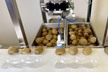
Apricots, cherries and early variety peaches and nectarines are being harvested, and late-variety peaches were being thinned last week in Stanislaus County. Over 300 growers in California, covering 17,000 acres in the San Joaquin Valley, produce over 95 percent of the apricots grown in the United States, according to an industry website, www.califapricot.com.
Source: capitalpress.com