According to what Luciano Trentini from Ferrara's Cso Centro servizi ortofrutticoli (Fruit and Vegetable Service Centre) stated during a recent meeting in Pachino (Sicily), the 561,000 tons of fresh tomatoes that have been bought by Italian families in 2012 came mainly from Italian supermarkets (32%) and hypermarkets (11%), whereas only 27% was bought by street vendors (see chart below).
Italy: quantities of tomatoes bought in retail according to the commercial channel (Source: CSO processing of GFK data). Click here to enlarge the chart.
In Italy, between January and November 2012, 527,807 tons were purchased in retail stores, which was 2% less than 2011, corresponding to a total of €1.022 billion. This data comes from the research carried out by the CSO and by the processing of specific market surveys.
Cherry and bunch tomatoes are the favourite
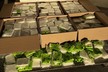
As they are available 12 months a year, cherry tomatoes currently represent 36% of the tomato market. Bunch tomatoes follow (in the photo below) with 28% and are available 9 months a year. Salad and ribbed tomatoes, which are available 6 months a year, still represent 12% of the market, although they are less common than they used to be.
Cherry and bunch tomatoes are the favourite
As they are available 12 months a year, cherry tomatoes currently represent 36% of the tomato market. Bunch tomatoes follow (in the photo below) with 28% and are available 9 months a year. Salad and ribbed tomatoes, which are available 6 months a year, still represent 12% of the market, although they are less common than they used to be.
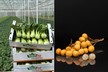
Finally, the new types of San Marzano and date tomatoes represent 4-5% of the market. New varieties of tomatoes are always being studied to attract the attention of consumers.
People prefer tomatoes in small trays and baskets
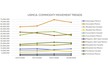
Research carried out in Italian mass retailing shows how around 40% of the production is sold packed in small trays or baskets, whereas around 35% is sold loose. Bigger trays are less popular, as they only make up 15% of the market (see chart below).
Italy: the evolution between 2000 and 2012 of tomato packaging in mass retailing (Source: CSO processing of CSO data). Click here to enlarge the chart.
The future
Mass retailing is getting more and more popular thanks to bigger chains with a wide range of products, fast deliveries, high standards, integration and shorter connections.
On the one hand, consumers are generally more aware, on the other hand, the excessive supply together with the financial contraction and digitalisation lead them to being more careful and demanding as regards quality and information.
"The reduction of consumption substitutes the attention for prices and value-for-money. The decrease in purchases of fruit and vegetables means 100 kilos less of fruit and vegetable per family per capita with respect to the beginning of the '00s."
What is mass retailing looking for in tomatoes?
Tomatoes must have external high quality, freshness, cleanliness and bright colour. At a qualitative level, they must have a long shelf-life, high internal qualities and therefore a good sugar/acid ratio and a satisfying content of minerals and vitamins in addition to aroma and taste.
It is also important to stress the connection to the territory and to have available an assortment that optimises value-for-money. In addition, it is also essential for the supply to be available 365 days a year and to have the support of both logistics and traceability.
Mass retailing also demands the compliance with GAP (Good Agricultural Practices), a low or equal to zero level of residue and the control of processes in order to guarantee healthy products.
This information is made known to consumers as well, who are now more careful of brands and products connected to the territory, as is the case for Pdo (Protected Designation of Origin), Pgi (Protected Geographical Indication) and Tsg (Traditional Speciality Guaranteed) products.