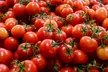
The Flandria quality label was introduced in 1995 at a time when pricing some central products, like tomatoes and chicory, was tricky. The idea rose to market these products under a label: Flandria. “The name refers to Flanders in Belgium, where most of the produce was coming from,” explains Raf de Blaiser, quality control manager at LAVA (Flandria’s affiliated produce auctions). The hallmark, however, has left its modest roots behind and is now an internationally recognized marker of quality in fresh produce.
 After tomatoes and chicory came greenhouse products like paprika, eggplants and cucumbers. After that, all kinds of vegetables were added. And since 1997 the label also covers fruit. “The lion’s share still consists of vegetables,” says De Blaiser, “but in order to let auctions and members benefit from the brand, we also included apples, pears, even potatoes.”
66 products now fall under the label, and its coverage is ever increasing. In order for a product to qualify, it needs scrutiny by a special team, that upholds certain minimum requirements. To remain part of the Flandria label, produce has to be sold exclusively to certified auctions. Quality control of the crop is an on-going procedure, starting in the fields and ending almost on the auction floors. The cultivation of Flandria produce happens mostly in Belgium, and the border regions of Holland and France.
In 2012 another aspect was added to the existing label: ‘Responsibly Fresh’, a marker implemented to check the product’s durability. The “three P’s” (people, planet, profit) have become something of a hallmark in themselves over at LAVA.
Ilse Ceulemans, responsible for marketing at LAVA, says the label itself is always under scrutiny as well. Its effectiveness is always being tested and polished.
“Abroad we are focusing on B2B (business to business) activities, promoting the label on exhibitions and in magazines. Domestically, we tend to concentrate more on the consumer. Since 2000, we’ve been sending newsletters, airing TV-promos, getting to know our clients on fairs and so on. And it’s been working out: Flandria has brand awareness with 73% of the Belgians. In surrounding countries, we are doing great as well.”
For more information: www.mijnflandria.be