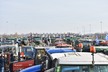
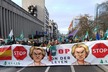
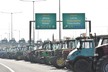
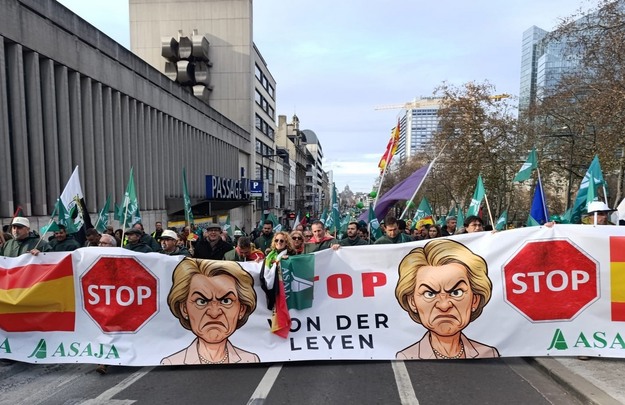
Approximately 20,000 farmers from 25 European countries gathered in front of the European Commission and Parliament in Brussels on Thursday. Organized by Copa-Cogeca, the protest demanded an independent budget for the Common Agricultural Policy (CAP) and fair competition for European producers. The demonstration coincided with the EU summit of heads of state and government, as well as Commission President Ursula von der Leyen's departure to Brazil to sign the trade deal with Mercosur.
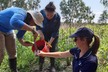
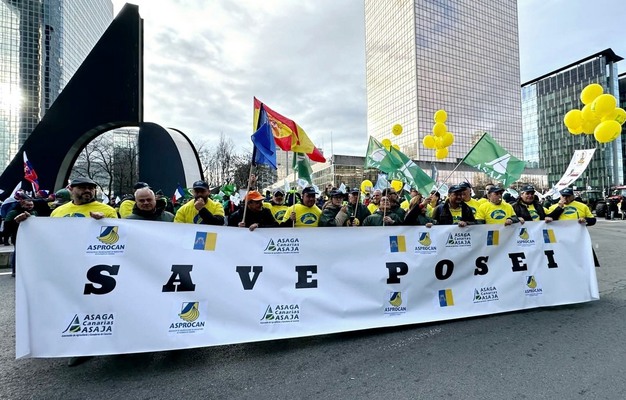
Delegations from ASAJA-Córdoba and the banana producers of the Canary Islands participated in the protest, using it to present their specific demands within the European framework.
 © Asaja Córdoba
ASAJA-Córdoba, led by President Fernando Adell, criticized the new Multiannual Financial Framework 2028-2034 and CAP reform, which they say involve a 32% budget cut, elimination of the two-pillar structure, and merging agricultural policies into a single fund. The organization warns that these changes could threaten farmers' incomes, territorial cohesion, and European food sovereignty. "Without a strong, common, and well-funded CAP, Europe's food security is at risk, and our farms have no future," ASAJA-Córdoba emphasizes. They also oppose the Mercosur agreement, which they believe permits large imports of agri-food products that do not meet European standards, adversely impacting sectors like rice, beef, and citrus.
 © Asprocan
Banana producers from the Canary Islands advocated for the continuation of support programs for the Outermost Regions (ORs) and for maintaining consistent market rules to address unfair competition. Raúl Martín, secretary of Asprocan, emphasizes that "European growers must undertake the green transition and meet the world's highest standards, but they cannot compete on equal terms if Europe allows imports of fruit that don't meet the same standards. Rules to protect health and the environment must apply equally to all." The banana sector has also criticized the removal of specific aid for the ORs, which was included in the new financial framework, warning that these changes could threaten farms, jobs, the agricultural landscape, and social cohesion in the Canary Islands.
In addition to ensuring funding and regulatory equality, both delegations call for simplifying European legislation to reduce burdens and controls that hinder farm management and penalize farmers who meet environmental, social, and phytosanitary standards.
The Brussels protest highlights the urgent situation in European agriculture and stresses the need to take concrete actions to build a profitable, sustainable, and competitive sector that reliably provides quality food for EU citizens.
Source: Asaja Córdoba and Asprocan