GF Marketing is unique in their focus on the Indian, Bangladeshi, and the Middle East wholesale sector, each constituting a third of their business but they do foresee that India’s share will grow this year, as it has every year in the recent past, says David Pearce, GF Marketing CEO.
The company, 50% owned by Tru-Cape, sells over 3 million cartons of citrus to the Middle East, India and Bangladesh a year and they have a large market share of South African apples, pears, lemons and oranges in those markets.

South African fruit exports are benefiting from its position on the globe
“Every year we sell more and more to India. India is buying from everybody, it’s such a big market. What’s good for South Africa, is we’re the most ideally suited country to supply India.”
This is particularly true this year, as David explains. “Chile can’t come to India because the freight rate is just too ridiculously high. Chile’s freight rate is double the South African rate; they just can’t be in the market at these rates. We ship more than 300 containers per year from Chile and we’re going to do virtually nothing this year because the shipping lines went ballistic with their freight rates. South Africa will definitely increase their market share in that marketplace.”
GF Marketing sources kiwifruit for the Middle East from Chile, trade which (unlike apples and pears) won’t be affected by the freight rate because Chilean kiwis have become a niche item into the Middle East.
New Zealand is competition for South African apples in India (not in the Middle East) but they too have big difficulties with logistics similar to those of Chile, and likely to do much less volume into India this year, David says.
High tariffs slow down SA-India trade
However, very high tariffs – 50% on South African apples and 35% on South African pears & citrus – dampen trade with India and after years, there still has been very slow progress on amendment of the requirement for landside cold treatment (South Africa would like to return to an onboard cold treatment protocol with India).
David observes that this hampers growth in South Africa's fresh trade to India. “We’ve been trying to conduct trade with India in a bigger way for a quite a long time. We could do much more with government assistance.”
Right: Packham pears
“India is the only country among our markets that still takes Packhams,” David notes. “But in India, demand for Packhams is decreasing and Vermonts are taking its place.”
“We’re in a very lucky situation in South Africa, in that if we’re able to load apples and pears within the next three or four weeks we’ll be able to get into the Middle East before and during Ramadan, which is for us the best-selling period of the year."
How to avoid last year’s lemon price crash in the Middle East
Lemons from Hoedspruit have been shipped since week 3; rain delayed the picking but has had little impact on the quality of the fruit.
“We have taken a strategic view on lemons, given that the Middle East is taking and selling 50% of South Africa’s lemons year in, year out. It is," David points out, "South Africa’s biggest lemon market."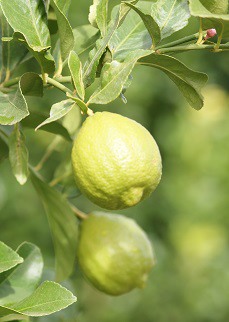 The Middle Eastern lemon market has gained some notoriety at the start of the South African lemon campaign. Last year a million cartons of lemons were loaded in week 15 and brought the price right down to US$6-8/carton, eventually stabilizing after a month but buyers stayed away from lemons for up to two months. This was caused by poor port productivity in South Africa and thus vessels bulking.
“We need to avoid those massive volumes in the beginning and the high price. We need to keep lemons moving each week, bringing the price in line with what the market can manage and the level at which the market can keep moving. In our company we decided on a revised strategy this year based on the three main zones of lemon production: Limpopo, down to Hoedspruit, Letsitele, where we feel the price should be the highest, and then for Senwes, which is your next big lemon area, we think the price should be US$ 1.00 less and for the Eastern Cape, less another US$1.”
Avoiding price drops, so that customers can actually make money and keep buying, is their aim. “It boils down to growers who pack well and get good tonnage per hectare. They’ll do well.”
There is no demand for chem-free or organic lemons from the Middle East, where lemons are indispensable in the kitchen, because of the appearance and the pricing level of organic lemons.
Next up for GFMarketing, around weeks 19 and 20, will be navels from Senwes and then the Western Cape, as well as mandarins (Clemengold and Tango) from week 19 to week 40. Valencias start in week 25 or 26.
There is some demand for grapefruit in the Middle East and India, but they are, he says, tiny markets for South African grapefruit.
Waiting with bated breath for South African kiwis
“South Africa is far behind everyone else in kiwifruit, although there’s been a lot planted but we don’t see volumes of packed pallets yet. There have been advances in red and gold but it’s airfreight and anyway, 90% of the kiwi going into the Middle East is green, it’s a very traditional market.”
He continues: “It would be ideal to take South African kiwifruit, it’s half the transit time. We wait with bated breath for South African volumes to increase.”
“Ludicrous” freight rates
There is zero possibility to use conventional shipping to India, David notes. Not only do some Indian ports not have the capacity to accept bulk freight vessels anymore, he says, but there just aren’t breakbulk vessels available anymore.
“We looked at that option for the Middle East last year to relieve congestion in the port and to get stuff moving, but the cost for a bulk vessel was just ludicrous.”
Shipping to Bangladesh has been hugely complicated by the decision from shipping lines that they don’t really want to go to Bangladesh, he remarks, so they’ve put in extreme freight rates in place for Bangladesh.
“For Bangladesh it’s US$9,000 per container and US$5,500 for the Middle East. We don’t see that we’ll be able to do any more volume to Bangladesh than we did because of shortages of equipment and vessels.”
 For more information:
David Pearce
GF Marketing
Tel: +27 21 944 9710
Email: [email protected]