During this time in previous years, enterprises were promoting exports to China to meet increasing demand by the year’s end, however this year, many enterprises have chosen to export to other markets.
The reason for this: China’s tightening of import standards for vegetables and fruits is causing difficulties for the export of Vietnamese products to the Chinese market. However, opportunities to expand exports to markets such as the US, EU, the Republic of Korea, Japan, ASEAN and others are opening up.
Dang Phuc Nguyen, General Secretary of the Vietnam Fruit and Vegetables Association said that China is Vietnam's main export market for vegetables and fruits, but it is slowing down, mainly because Vietnamese enterprises have not been able to adapt to new import management measures from China. To compensate for the market shortage, enterprises are trying to diversify export markets, focusing on markets that have already signed free trade agreements (FTA) with Vietnam such as the EU, RoK, and Japan.
In particular, thanks to the Vietnam-EU FTA, opportunities for exporting fruits and vegetables to the EU are opening up. Vietnam’s export of vegetables and fruits to the EU reached US$100 million in 2018, which was considered too low compared to the market demand. The EU is currently importing various types of fresh fruits and vegetables from developing countries such as avocado, mango, and potato which is a great opportunity for Vietnamese vegetables and fruits.
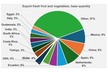
Many exporters of agricultural products are also trying to expand their export markets in order to reduce their dependence on the Chinese market. According to the Import-Export Department (Ministry of Industry and Trade), 2019 was a difficult year for Vietnam's fruit and vegetable sector as China - a market accounting for 70% of Vietnam’s total fruit and vegetable export turnover, strengthened their measures regarding testing, quarantine, quality control and traceability of Vietnamese agricultural products.
Vietnam's export revenue of vegetables and fruits to the Chinese market reached US$2.08 billion in the first 10 months of 2019, down 14.5% compared to the same period in 2018. This was also considered the main reason for the reduction of Vietnam’s export revenue of vegetables and fruits in the past 10 months of 2019.