The National Agricultural Health Service (Senasa) announced that Peru exported 706,379 tons of table grapes to 53 international markets during the 2025-2026 campaign. This result further cements the country's standing as a global leader in grape exports for the third consecutive year.
A key factor in this outcome has been the use of cold treatment in the ships' refrigerated holds, which has enabled compliance with phytosanitary requirements, particularly for the United States market.
Throughout the season, Senasa supervised 33,280 cold treatments in packing plants, enabling the shipment of 685,575 tons of grapes. An additional 20,804 tonnes were shipped via inspected vessels with refrigerated holds, mainly from Piura (8 vessels) and Ica (3 vessels).
This treatment involves storing the fruit at low temperatures for a specific duration to eliminate or inactivate immature fruit fly stages. It can be applied either at the source or during transport without compromising the product's quality. This ensures the grapes arrive in perfect condition and boosts confidence in international markets.
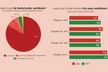
52% of exports went to the United States, with the Netherlands (12%) and Mexico (9%) following. These three countries together account for 73% of the total. Additionally, markets such as Canada, Spain, the United Kingdom, Colombia, China, and Taiwan are also notable.
The season runs from July to June and features over 50 types of table grapes. The leading export varieties are Sweet Globe (26%), Autumn Crisp (21%), Allison (11%), and Red Globe (10%). These varieties are well known in global markets for their high quality.
To maintain this growth, Senasa approved 121 packing plants and certified 23,356 hectares of crops, primarily in Ica (50%) and Piura (34%), along with Lambayeque, La Libertad, and Arequipa.
These results are also due to collaboration among producers, agricultural organizations, and authorities, who have strengthened integrated fruit fly control under Senasa's technical guidance to protect crop health and sustain the sector's competitiveness.
The agency has also helped open new markets for Peruvian grapes, including Argentina, Japan, China, Ecuador, and Israel. Thanks to this joint work with the Association of Table Grape Producers (Provid), the product now has access to 97 international markets.
Efforts are ongoing to expand this presence by opening new destinations such as Chile, Australia, the Philippines, Egypt, South Africa, and Paraguay, thereby further increasing trade opportunities for producers.
Source: agraria.pe