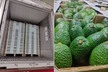
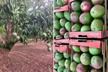
Mango production in the Konkan region of India is reported to be lower this season, affecting supply to domestic and export markets.
Growers in Ratnagiri district indicate reduced yields. A farmer managing orchards in Sangameshwar and Ratnagiri said output is not sufficient to cover transport costs. "Even if I send mangoes to the markets of Pune, I would end up paying for transport…there simply would not be enough quality to cover costs. In my 20 years of active farming, this would be the first time I am faced with such a situation," he said.
By March, growers typically harvest around 30 boxes per day, but this season, output is reported at 10 to 15 boxes per week in some orchards.
Konkan, known for Alphonso (Hapus) mangoes, usually supplies markets in Pune and Mumbai by mid-March, with exports to the United States, Europe, and the Middle East. India exports around 25,000 to 27,000 tons of mangoes annually. This season, growers report limited volumes for both domestic and export markets.
A grower in Ratnagiri said, "Almost 80% of the mango crop is gone. What we have left is not enough even for the local market; we have no strategy ready."
Mango orchards produce once a year, and growers depend on both yield and quality. Annual orchard maintenance costs are reported at around Rs 4 lakh (US$4,800), with break-even production estimated at 1,000 boxes. Current market prices in Pune are reported at Rs 6,000 to Rs 8,000 (US$72 to US$96) per box, but volumes are insufficient to fill transport loads.
Market arrivals have been limited. At the Vashi wholesale market in Navi Mumbai, around 500 boxes were available during Gudi Padwa, compared to around 50,000 boxes in a typical season.
Weather conditions are cited as a key factor. Flowering requires temperatures of 19 to 24°C, but temperatures dropped below 10°C during January and February, affecting fruit set. Dew conditions also led to fungal pressure. Some growers reported higher proportions of male flowers, resulting in reduced fruit formation.
A grower in Devgad estimated output at around 20% of normal levels and indicated that sales may start later in April.
Export volumes are also expected to decline. Exporters indicate shipments may reach about half of typical levels. Air freight costs have increased, with rates reported at Rs 4,000 (US$48) per dozen compared to Rs 200 (US$2.40) previously. Sea freight to the Middle East is reported as unavailable.
The season remains under review, with growers assessing yields and adjusting marketing plans.
Source: 101Reporters