A compound derived from a microorganism from a branch of life known for surviving in extreme conditions could provide Washington fruit producers with a new tool to combat fire blight and Listeria.
Washington State University researcher Cynthia Haseltine has spent nearly a decade developing and testing the compound. The work is now moving into field trials with support from a US$141,293 grant from the Washington Tree Fruit Research Commission.
"This work has the potential to make a real difference for Washington's tree fruit industry," Haseltine said. "If it performs as expected, it could help growers better manage fire blight in orchards while also reducing costly Listeria risks in packing facilities."
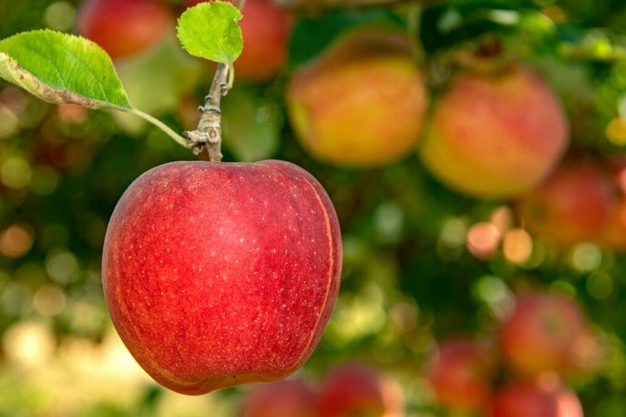 © WSU
© WSU
Haseltine studies archaea, microorganisms that can survive in environments such as boiling acid, deep-sea hydrothermal vents, and salt crystals. One of these organisms is the basis of the compound, which has shown effectiveness in laboratory settings against pathogens linked to fire blight and listeriosis.
Fire blight is one of the main threats to Washington's tree fruit sector, which produces nearly two-thirds of U.S. apples. Losses linked to the disease exceed US$100 million annually nationwide. Current control strategies rely on antibiotics such as streptomycin, which is losing effectiveness due to resistance, and copper-based products that raise environmental concerns.
Listeria contamination can occur during harvesting, processing, and packing. Although only 10 to 25 cases are reported annually in Washington, outbreaks can result in losses of US$5 million to US$15 million due to recalls, unsellable fruit, and reputational impact.
"Listeria is a major economic problem in packing lines," Haseltine said. "Recalls can cost between $5 million and $15 million, and beyond that, growers absorb the loss of fruit that can't be sold and the reputational damage that comes with it."
The two-year project will focus on scaling production, testing stability under different conditions, and conducting orchard and packing-line trials. The compound remains stable across a range of temperatures and has shown effectiveness against pathogens within biofilms. It is also considered less likely to lead to resistance.
"There's a really low chance for resistance developing," Haseltine said. "For that to happen, it would require multiple simultaneous mutations that are, statistically, very, very unlikely, whereas antibiotic resistance is often a single mutation."
Field trials are underway through WSU Extension. Orchard trials are being led in Wenatchee by Tianna DuPont, while Claire Murphy is supporting packing-line research.
"Moving this out of the lab and into real-world conditions is a critical step," Haseltine said. "We need hard data from trees and from listeria in packing lines to understand how the compound performs and whether it can become a practical tool for growers."
The goal is to generate data to attract commercial partners capable of producing the compound at scale.
For more information:
Washington State University
Email: [email protected]
www.news.wsu.edu