Another significant "natural flowering" event has reshaped Australia's pineapple market, with Anthony Dobson, general manager at Tropical Pines, describing a disruptive cycle that has moved from glut to shortfall within a matter of weeks.
 © Tropical Pines
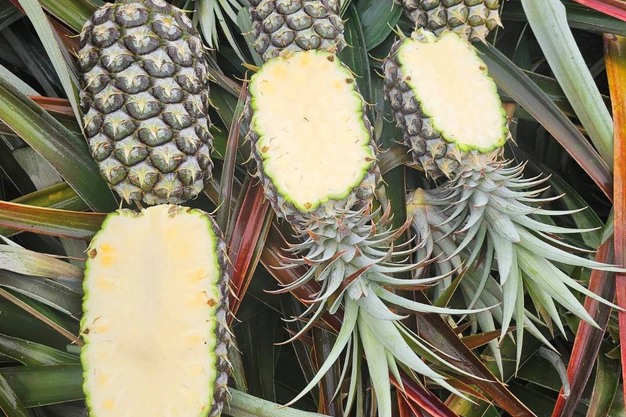
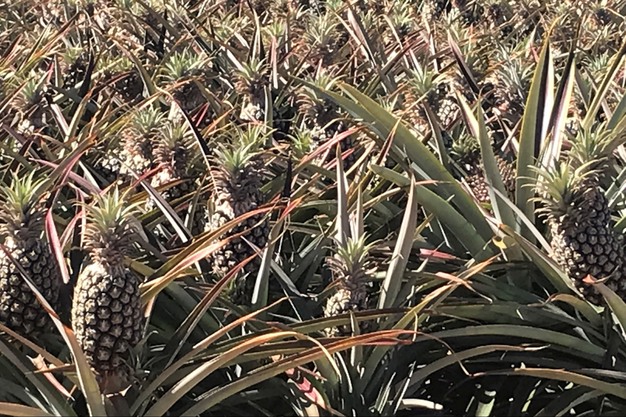
Ideally, growers control the two-year cycle for pineapples, inducing flowering when plant size is optimum so that they get the pineapples in a block (22,000+ plants) to grow and ripen at the same time to a commercially suitable size. But that doesn't always work out, he explains. "They're very sensitive to large temperature fluctuations, which causes stress within the plant," Dobson says. Prolonged cloud cover and fluctuating conditions have placed these crops under pressure, triggering premature flowering. "When it stresses, that's when it sets flower."
The result is a loss of control over the crop cycle. "We always get a big peak followed by a huge shortage," he says. "We get a flush because it comes earlier than anticipated, but once we've gone through it, we end up with a big shortfall." This year, plants in some areas of Queensland have flowered long before reaching their optimal size for "forcing". "If we have very small plants flowering naturally, we end up with a very small pineapple, and those pineapples are not commercially viable."
And that's what happened after weather events stressed plants late last year, leaving the industry to pick up the pieces. "That fruit should have been forced at a different time — it's gone off naturally, and basically we've lost control of the crop," Dobson says. The consequence is a supply gap that will take time to correct. "It'll take two years to fully recover."
 © Tropical Pines
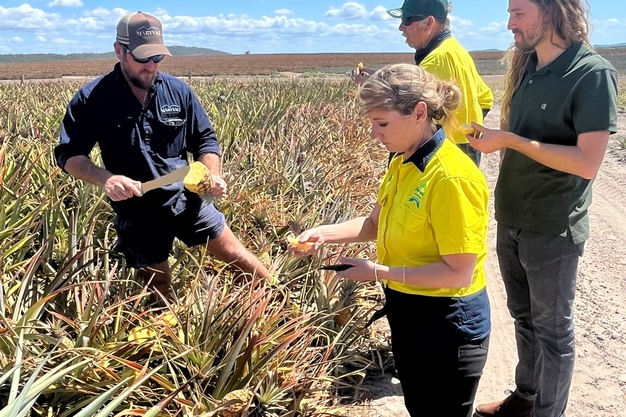
The impact has been uneven across regions. "It was really heavily focused in southeast Queensland," he says. Areas such as the Glasshouse Mountains and surrounding districts were most affected, while other growing regions have remained relatively stable. "We weren't overly affected in central Queensland, and north Queensland hasn't been affected by natural flowering," he explains.
That geographic spread has helped stabilise the market. "From a consumer perspective, they're going to be paying more for the fruit because it'll be balanced out by the demand," Dobson says. "Pineapples are not disappearing from the shelf — it's just less than optimal supply."
 © Tropical Pines
At the same time, the industry is working on longer-term solutions to reduce vulnerability to stress events. "We've had a project running with the University of Queensland for the past decade," he says. The aim is to develop varieties that are less prone to natural flowering. "We're looking at what we can do through normal genetics to make the plant less susceptible to being triggered."
The concept, he adds, is simple in principle. "You're trying to chill them out; they're going to go through something stressful, but you just want them a bit more relaxed." While not a complete fix, such advances could reduce the frequency and severity of these disruptions.
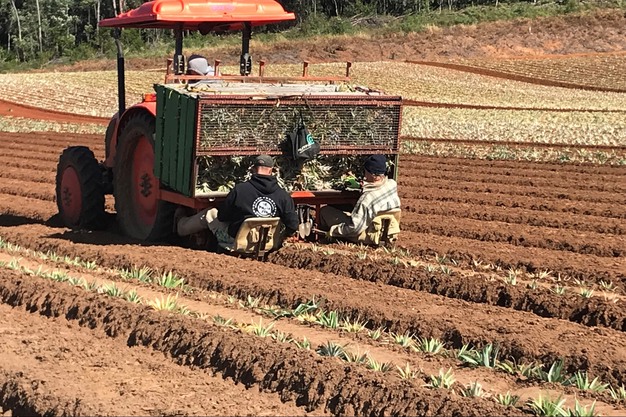
Beyond production challenges, the sector faces broader structural issues. "Pineapple isn't really growing in terms of consumption. It's sort of flatlining," Dobson says. Changing consumer habits have left the category behind. "The market has moved on, and we haven't kept pace. The demand is for more convenience, more quickness."
 © Tropical Pines
Export offers no relief. "We don't do any exports of pineapple from Australia," he says bluntly. Cost remains the key barrier, with lower-cost competitors, particularly in Asia and Central America, leaving Australia unable to get close on price. "We're growing a third-world crop in a first-world country. It's very difficult to expand into those markets."
Instead, the focus is shifting toward value-added opportunities. "The way we'll tap into export is by value-adding product," Dobson says, pointing to processed formats that reduce waste and improve margins.