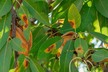
As the 2026 almond season in California moves from petal fall into early leaf development, Red Leaf Blotch remains a consideration for growers. Field observations and UC Cooperative Extension monitoring indicate that disease risk persists, including under drier conditions.
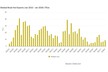
According to Florent Trouillas, UC Cooperative Extension plant pathologist, spore trapping in locations such as Stockton and Merced has shown continued detection of Polystigma spores over recent weeks, including in sprinkler and drip-irrigated orchards without rainfall.
Field observations indicate that spore release has occurred under varying spring conditions. Sprinkler irrigation systems that wet leaf litter may increase risk. While relative humidity alone is generally not sufficient to drive infection, free moisture on leaf surfaces, including dew, may support spore germination.
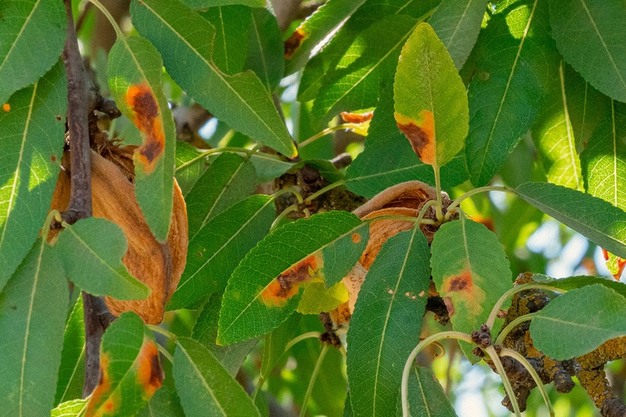 © California Almond Board
Fungicide timing remains a key factor in disease management. In 2026 field trials, applications were made during the first week of March, with follow-up treatments planned around three weeks later. Petal fall and the following two to three weeks remain the main window for protecting new leaf growth.
Some growers may consider delaying applications during dry periods. This approach depends on orchard history, irrigation method, and current disease pressure. Previous seasons have shown that a single early application in March can limit symptom development, with later infections mainly affecting new shoot growth.
Young orchards, particularly first- and second-leaf trees, are more exposed to infection. Severe cases can affect vegetative growth and delay production development, making early protection a factor in management decisions.
Provisional UC IPM guidelines for Red Leaf Blotch management have been published this season. These include fungicides with documented efficacy and are intended to support product selection and resistance management.
Growers continue to assess the balance between disease risk and application costs. Later-season treatments, especially beyond May, are generally less effective for Red Leaf Blotch control. Early-season management remains the main approach.
Current weather conditions are described as dry and hot compared to the previous season. Ongoing work is assessing how environmental factors influence disease pressure. Management decisions are based on field monitoring, irrigation practices, and orchard history rather than rainfall alone.
 © California Almond BoardFor more information:
Almond Board of California
Tel: +1 209 549 8262
Email: [email protected]
www.almonds.org