René Segers has been a buyer at the Dutch company Mulder Onions for 17 years. He says the onion market's unpredictability is what makes it interesting. "No two years are the same. One year, you have a good harvest; the next, a lesser one. Large onions, then small ones. And markets can change from one year to the next," he begins.
One country can, for instance, be a big buyer in a given season, only to be entirely self-sufficient the next year. René cites Brazil as an example. "If they have a good harvest, they sometimes don't enter the market at all."
 © Mulder Onions
Hectic first half of the season
According to René, a definite trend has developed in recent years. "Between August 1 and January 1, we're all incredibly busy, with nearly half of the export volume going to the Ivory Coast and Senegal," he explains. René, however, believes the sector sometimes focuses too much on record exports.
"We like to boast about high export figures, wondering if we'll reach 900,000 tons. But little is said about whether those are truly high-quality onions," he says, referring to the danger of oversupplying some markets and the financial risks that brings.
"Oversupplying markets means payment issues. That deserves slightly more attention." Segers says Mulder Onions is well-experienced in the African market and is cautious with new clients. "We always try to secure payment in advance. Not all exporters do that," he knows.
Quieter market after New Year's
After New Year's, the export market usually dies down a bit. "Things still moved along reasonably well in weeks 1 through 3, but week 4 showed a clear decline," René says. Predicting how the market will develop is tricky. Much depends on demand from regions such as Germany, Italy, and Eastern Europe. "The Dutch sector often has to rely on crop failures elsewhere," he admits.
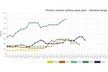
Prices are fairly stable, though medium-sized onion prices were still under pressure before Fruit Logistica in Berlin. That level, however, appears to be holding steady again. For red onions, supply is high, and quality varies widely.
Specific demand for Class I
According to René, quality is this season's main focus. "There are still plenty of onions; the question is how many good ones are left." Supermarkets, especially in Germany and Italy, specifically want nicely colored, firm-skinned Class I onions. Thanks to modern sorting technology, like optical graders, sorting is usually not the problem. Mulder Onions operates as an exporting firm in partnership with different packing facilities. "We can, thus, always source the right product."
Cultivation changes
Segers points out that the onion cultivation in the Netherlands is shifting. Zeeland used to dominate; now many onions come from Groningen, Drenthe, and other regions. Looking ahead, he sees challenges primarily related to the shrinking range of available resources. "Fewer crop protection products will likely be the biggest challenge for onion cultivation," René concludes. (IH)
For more information:
Mulder Onions B.V.
Tel: +31 (0)45 567 87 00
[email protected] / [email protected]
www.mulder-onions.com