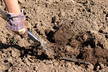
In the Netherlands, Wiskerke Onions introduced a regenerative cultivation framework to growers in December 2025. Potato processor McCain's regenerative agriculture program inspired this system, designed to help growers make their cultivation more sustainable.
According to Chayenne Wiskerke, using an existing, proven system for the onion framework was a deliberate choice. "Farmers adopt a farm-wide approach. Potatoes, onions, and other crops can be made more sustainable in a similar way. It could become a nice market standard," she says.
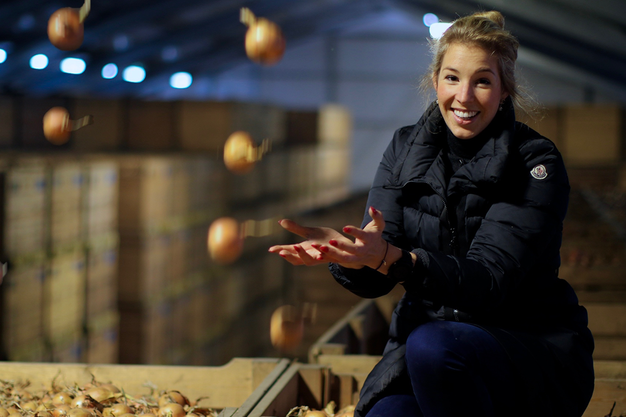 © Wiskerke Onions
Chayenne Wiskerke
Regenerative onion demand is retail client-driven. Unlike, say, potatoes and carrots, there are very few regeneratively grown onions commercially available. That is changing: Wiskerke wants to bring the first regenerative onions to market from week 39 of the new season.
Chayenne says structuring the development of regenerative farming is vital. "It was critical to us, as a retail supplier, to take the first step to avoid a myriad of different cultivation systems."
Measurable system
Regenerative agriculture is still interpreted in many different ways, says buyer Lynette Verweel. "One grower focuses on soil cultivation, another on crop rotation. That's why we wanted a single measurable system with clear standards," she says. Together with McCain, various core requirements have been established. Growers have three years to start working fully according to the regenerative system. During that time, data is used to monitor their progression.
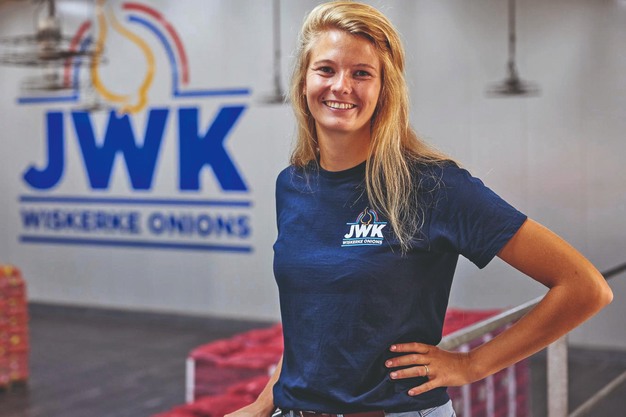 © Wiskerke Onions
Lynette Verweel
Important indicators include soil coverage and tillage, crop rotation, soil cultivation, as well as crop protection, fertilizer, and water usage optimization. According to Lynette, that helps growers increase their soil's resilience to climate influences and better respond to increasing sustainability requirements from customers and financiers.
For the first season, Wiskerke expects the program to cover 100-150 hectares of red and yellow onions. It is fairly easy for growers to join, while the standards will gradually become stricter.
Added value and joint approach
Growers have an important question: Does regenerative cultivation add value? Chayenne says that is the goal. "We definitely want to reward committed growers." Wiskerke Onions also expects that investing in soil health will eventually pay off, leading to, for example, more stable yields and more robust cultivation.
The company thus works closely with growers and holds events for them to share knowledge. "We believe in a collective approach in which profitability, soil health, and corporate social responsibility go hand in hand," says Lynette.
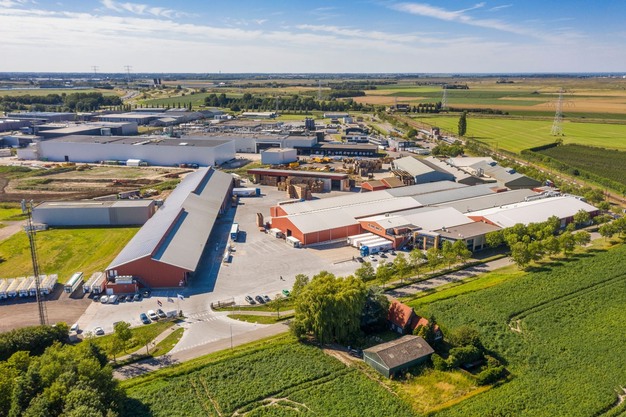 © Wiskerke OnionsLocation JWK Onions in Kruiningen
Data-driven farming
Data is an essential part of the program. According to Chayenne, Wiskerke Onions has been working in a data-driven way for some time, both in trade and in cultivation. "Knowledge is power. Understanding the cultivation data improves our work efficiency and better demonstrates that Dutch onion cultivation is sustainable and future-proof," she concludes. (IH)
For more information:
Wiskerke Onions
Stationsweg 8
4416 PJ Kruiningen
Tel: 0113 382 210
[email protected] / [email protected]
www.wiskerke-onions.nl