In 2025, a total of 308 businesses in Rhineland-Palatinate cultivated an area of just under 16,500 hectares for vegetables and strawberries. According to the State Statistical Office in Bad Ems, this represents a decline of 16 farms and a reduction in acreage of 400 hectares. The largest share of the cultivated area – around 16,000 hectares – is accounted for by vegetables grown in open fields. The average open field area per farm was 57 hectares, around two hectares more than in the previous year.
Outdoor vegetables in 2025: slight decline in area, significant differences between crops. In 2025, a total of 539,600 tons of vegetables were harvested outdoors. In the previous year, the harvest volume was 564,600 tons. This corresponds to a decline of 25,000 tons or four per cent.
Root and tuber vegetables: Declines in carrots
With 8,300 hectares, the root and tuber vegetable crop group remained the largest in terms of acreage in the open field. Compared to 2024, the area decreased by four per cent. The harvest volume fell by eight per cent to 342,600 tons. The most important vegetable type within the root and tuber vegetable group is radish. Despite only a slight reduction in area (down five per cent to 2,020 hectares), the harvest volume fell by 19 per cent to 43,300 tons.
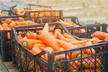
The area under cultivation for carrots decreased by six per cent to 1,980 hectares. The harvest volume fell by 20 per cent to 101,800 tons. This was mainly due to a 14 per cent decrease in yield per hectare to 514 decitonnes per hectare. The area under cultivation for spring onions and green onions was just over 1,700 hectares in 2025 (down seven per cent). The harvest volume fell by 13 per cent to 75,700 tons. The area under cultivation for onions, including shallots, remained virtually stable at 1,710 hectares (down one per cent). The harvest volume rose significantly by 26 per cent to 75,700 tons. This was mainly due to an increase in yield per hectare of 26 per cent to 442 decitonnes per hectare.
Leaf and stem vegetables: Stable harvest despite smaller area
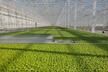
In addition to asparagus, leaf and stem vegetables include a variety of lettuce. The area under cultivation decreased by three per cent to 4,100 hectares, while the harvest volume remained almost constant at 83,900 tons. Asparagus was grown on a productive area of just under 1,070 hectares. Compared to the previous year, the area decreased by five per cent. A total of 5,700 tons were harvested from this area. Due to higher yields, the previous year's result was only missed by just under two per cent. Lettuce was grown on 1,640 hectares (up 15 per cent). The harvest volume rose by 27 per cent to 41,700 tons.
Cabbage vegetables: Stable area, higher harvest volume
The area under cultivation for cabbage vegetables remained constant at 1,500 hectares. The harvest volume rose by three per cent to 51,300 tons (2024: 49,700 tons). Cauliflower accounted for the largest area under cultivation, at 510 hectares. The harvest amounted to 15,400 tons, which was seven per cent below the previous year's figure of 16,500 tons. Nevertheless, cauliflower remains the highest-yielding crop among cabbage vegetables in open-field cultivation in Rhineland-Palatinate.
Fruit vegetables on the rise
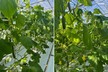
The area under cultivation for fruit vegetables was expanded by eight per cent to 1,410 hectares. The harvest volume rose by nine per cent to 43,100 tons. Edible pumpkins in particular – such as Hokkaido, butternut, and giant pumpkins – gained in importance. The area increased by ten per cent to 910 hectares, and the harvest volume by six per cent to 24,400 tons.
Rhineland-Palatinate in a nationwide comparison
In Germany, a total of around 4.3 million tons of vegetables were harvested on 130,400 hectares of open land in 2025. Around 5,770 farms were involved in open-field cultivation. The average open-field area per farm was just under 23 hectares. The vegetable farms in Rhineland-Palatinate were thus more than twice as large. Rhineland-Palatinate accounted for around 13 per cent of the nationwide open-field harvest and twelve per cent of the cultivated area. This underlines the importance of vegetable cultivation in Rhineland-Palatinate in a national comparison.
This importance is also evident at the regional level for individual crops: Rhineland-Palatinate accounted for around 82 per cent of nationwide production (75,700 of 92,300 tons) of spring onions. Rhineland-Palatinate is also the leader in radish production. Around 65 per cent of the German harvest (43,300 of 67,000 tons) was produced here.
Organic farming is on the rise
In 2025, organic farms produced a total of 79,400 tons of vegetables (Germany: 597,000 tons) on around 2,800 hectares (Germany: 20,600 hectares) in 2025. This corresponds to 14 per cent of the total vegetable cultivation area (Germany: 16 per cent) and 13 per cent of the total harvest (Germany: 13 per cent). Compared to 2024, the area under organic cultivation in Rhineland-Palatinate increased by nine per cent, and the harvest volume by 15 per cent. In 2025, the largest area under organic vegetable cultivation was accounted for by root and tuber vegetables, with 1,100 hectares.