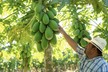
A Kochi-based entrepreneur has developed a model that allows consumers to lease Alphonso mango trees and secure ownership over the harvest. The concept emerged after demand from neighbours for export-quality mangoes sourced during trips between Kerala and Bengaluru.
The venture, Rent a Tree, manages around 250 acres of Alphonso mango farms across Ratnagiri in Maharashtra, Dindigul in Tamil Nadu, and Palakkad in Kerala. Customers can lease individual trees without managing orchard operations. The platform offers three categories based on expected yield: base at 30 to 50 kg, standard at 45 to 75 kg, and max at 60 to 90 kg per tree. The harvest window lasts four months and varies by region, beginning in February in Palakkad and extending to June in Tamil Nadu. Fruit is harvested every two weeks and shipped to customers nationwide.
Currently, 160 customers participate in the program, with tree leasing capped at 200 units. Prices start from ₹10,300, equivalent to approximately US$125, and increase as the harvest window approaches. In addition to leasing, the company supplies mangoes directly and processes surplus fruit into pulp.
"To establish a startup, it needs to address a problem. We discovered that it was impossible to bring fully mature mangoes to the market due to their perishable nature. This leads to fruit being harvested at 75% maturity. People choose artificial methods to ripen fruits, which involve the use of harmful chemicals. This affects the health of the customers, and it also means that no one gets to taste a naturally ripe mango," says Umesh Damodaran.
He adds, "So ethically, we sell only those mangoes that are plucked."
The company leases land from farmers and manages operations using local labour. According to Damodaran, traditional marketing channels often limit farm returns, particularly when financiers control initial harvest purchases and pulp processing. He states that reducing intermediary layers can improve revenue outcomes for growers.
One operational challenge remains consumer awareness and trust, following cases where advance-payment fruit schemes failed to deliver. "We are trying to get the help of the governments to give our operations more legitimacy," Damodaran says.
Looking ahead, the company plans to expand offerings. "We have to build trust with the customer; that's the only way to grow. We plan to sell other fruits too, with farmers willing to supply us with exotic fruits like rambutan and mangosteen," he says.
Source: The Hindu