Commenting on analysis indicating that climate change increased the intensity of the extreme rainfall that led to flooding across parts of the western Mediterranean, including Spain, Portugal, and Morocco, from which the UK imports significant volumes of fresh fruit and vegetables, Gareth Redmond-King, Head of International Programme at the Energy and Climate Intelligence Unit, said climate change presents risks to UK food security.
He noted that food experts and government national security advisers have identified climate change as a risk factor for food supply. He stated that reducing emissions to net zero is considered a scientific approach to limiting future climate impacts, such as the recent heavy rainfall events in Spain, Morocco, and Portugal.
 © Energy & Climate Intelligence Unit
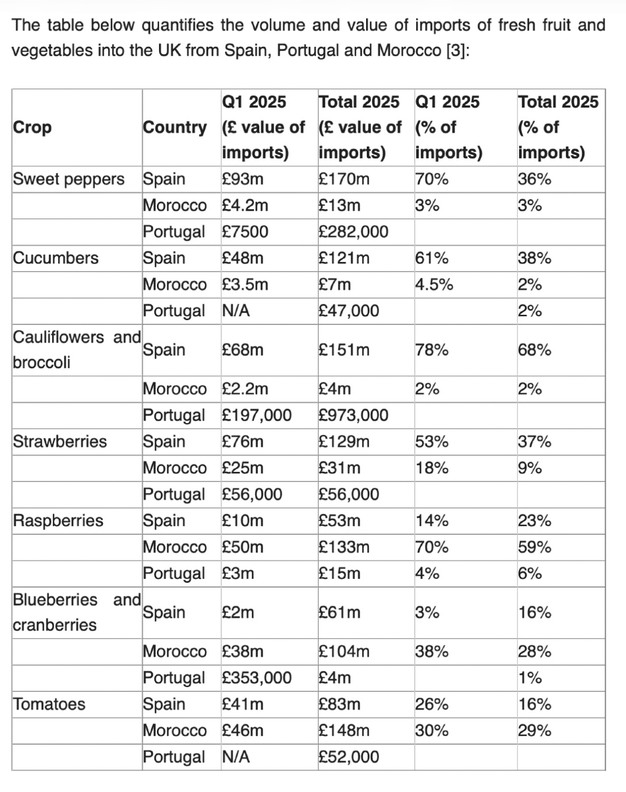
Redmond-King said that two-fifths of the UK's food is imported, and last year imports from Spain, Portugal, and Morocco totalled £5.4 billion. Among the top 30 food imports were more than £500 million of tomatoes, sweet peppers, and cucumbers, and nearly £500 million of strawberries, raspberries, and other berries. Imports also included more than £150 million of cauliflowers and broccoli. These products are typically not grown in the UK at this time of year, resulting in seasonal dependence on overseas supply.
He added that climate-related impacts in exporting countries, combined with the UK's second-worst harvest on record last year, can affect food quality and reduce available volumes. This may lead to increased competition among buyers, higher prices, and supply gaps in retail outlets if such conditions persist.
 © Energy & Climate Intelligence UnitFor more information:
Energy & Climate Intelligence Unit
Email: [email protected]
www.eciu.net