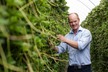
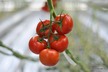
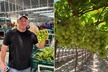
RAK Fruits might be a relatively new name in the Dutch fresh produce sector, but according to the company, the experience behind it goes back decades. Established in the Netherlands around six months ago, RAK Fruits operates as an extension of an Egyptian export business that has been active for about two years. The company focuses on importing Egyptian fruit into the Dutch market, with a strong emphasis on service, communication, and proximity to customers.
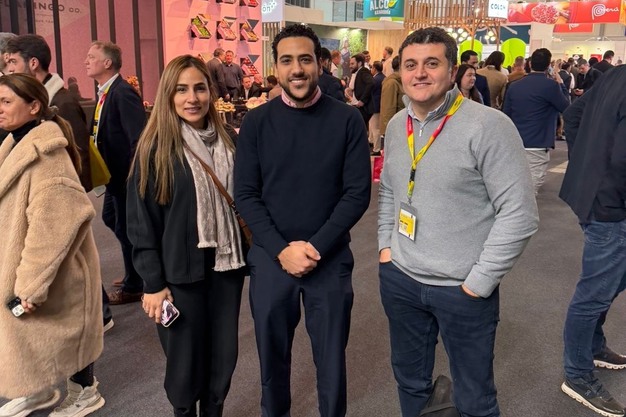 © RAK Fruits
"RAK Fruits in the Netherlands is an expansion of our activities in Egypt," says Abdul Hamaky, who is responsible for business development and operations between Egypt and the Netherlands. "The legal entity is new, but the experience behind the company is not. Within the family, some people have been active in this sector for around 30 years."
Family structure as an operating model
According to Abdul, the family structure plays a central role in how RAK Fruits operates. Family members are based both in Egypt and in the Netherlands, which the company sees as a way to shorten communication lines between origin and destination.
"In the trade between Egypt and Europe, miscommunication can sometimes occur," he explains. "By having family members on both sides, we try to eliminate that gap. The people sourcing the product in Egypt and the people speaking directly to the client in the Netherlands are closely connected. That makes decision-making faster and clearer."
Sourcing according to customer demand
The Dutch operation currently consists of three people. In Egypt, the company relies on a larger team, including staff with long-standing experience in sourcing, quality control, and logistics.
RAK Fruits works with a network of partner growers and packing facilities in Egypt. While the company maintains long-term relationships with these partners, sourcing is largely driven by customer demand and seasonal availability.
"Our network is extensive and built on partnerships," Abdul says. "At the same time, it allows us to respond flexibly to what clients need. That flexibility is an important part of our business model."
Netherlands as logistical and commercial hub
While the decision to establish the company in the Netherlands was partly driven by family members already living and working there, Abdul also points to the country's role as a European trading hub. "If you look at fresh produce trade in Europe, the Netherlands is the place to be," he says. "Being present here allows us to meet clients face to face, respond quickly, and take care of the entire import process."
RAK Fruits works with logistics partners for transport and warehousing. The company supplies customers on a delivered-duty-paid basis, meaning that import procedures, customs, and duties are handled by RAK Fruits. "We try to take the hassle out of importing for the customer," Abdul explains. "The client receives the product at the warehouse, on time and in the expected quality."
Seasonal focus on citrus and strawberries
RAK Fruits works on a seasonal basis. In the current season, the company's main focus is on Egyptian citrus, particularly oranges, as well as strawberries. According to Abdul, this is a conscious choice linked to seasonality and the company's start-up phase. "For oranges, the season runs mainly from December to March, with additional volumes in April and May," he says. "Strawberries are available from November through March."
Volumes are deliberately kept limited for now. For strawberries, the company works with minimum volumes of three pallets and a maximum of six pallets per client. "We are not focusing on large volumes yet," Abdul explains. "Our priority is to make sure that procedures, quality control, and logistics are working perfectly. Once that foundation is solid, volumes can be increased."
Depending on the season, the company also supplies other Egyptian products, including pomegranates, mangoes, mandarins, lemons, grapes, and Barhi dates. For the time being, RAK Fruits supplies mainly Dutch customers. Expansion to other European markets is part of the longer-term strategy, but this depends on obtaining additional certifications.
Customers and certifications
RAK Fruits currently focuses on small to medium-sized wholesalers in the Netherlands. Larger wholesalers and catering or foodservice companies are seen as the next step. "These customers require flexibility and reliable delivery," Abdul says. "We want to grow together with them, rather than chasing short-term deals."
The company works with GlobalG.A.P.-certified growers and cooperates with packing and sorting facilities that operate under standards such as BRC and ISO. Additional certifications required for wider distribution within the EU from the Netherlands, such as IFS, are part of the company's long-term agenda.
Quality control and packaging
Quality control is carried out at multiple stages, according to Abdul. Since RAK Fruits imports the products itself, shipments are inspected upon arrival at the warehouse in the Netherlands before being delivered to customers. "No substandard product reaches the client," he states. "If there is an issue, it is identified before delivery."
Packaging is another area the company pays close attention to. Feedback from Dutch customers about packaging quality has influenced RAK Fruits' approach. "We noticed that packaging from Egypt is sometimes not sturdy enough," Abdul explains. "That can cause problems during handling. We prefer to invest a bit more in proper packaging, even if it reduces margins, because it protects the product and prevents losses."
Building long-term relationships
Asked about challenges, Abdul describes the early phase of building trust as the main hurdle. "Like any new company, you have to prove yourself," he says. "Sales are challenging in the beginning. But we are confident in our ability to offer competitive prices, consistent quality, and strong service."
In addition, RAK Fruits is in discussions with several larger Egyptian exporters about acting as their representative in the Netherlands. "The idea is that we can function as a local Dutch entity for these exporters," Abdul explains. "That would allow them to be closer to the market and their customers, while benefiting from our presence and network here."
Looking ahead, success for RAK Fruits is not defined primarily by volume growth. "For me, success means still working with the same clients in three years' time," Abdul concludes. "Long-term relationships are the goal. Quality, freshness, and service will remain our focus."
Small initial steps toward an ambitious goal
In this highly competitive market, RAK Fruits aims to combine sourcing in Egypt with a commercial presence in the Netherlands, building and expanding its position in the European fruit trade step by step. While the initial steps may seem modest, the company's long-term ambitions extend beyond the Dutch market. "Our plans for the future?" Abdul smiles. "The sky is the limit!"
For more information:
RAK Fruits
Tel: +31 (0) 6 28709581
[email protected]
rakfruits.nl