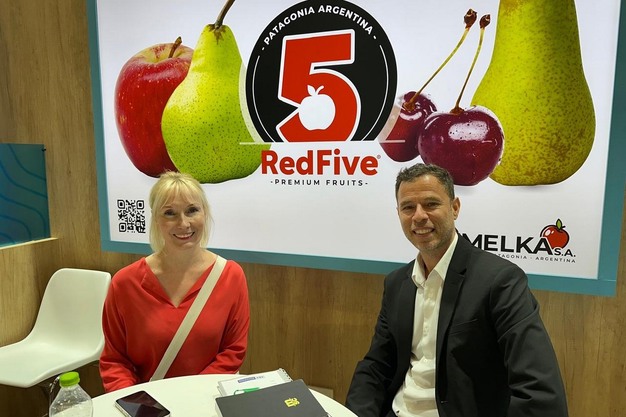
The Argentinean pear campaign started in early January with the Williams variety, and, at this stage of the season, the main red and green varieties have already been harvested, including the Red Bartlett, Red Anjou, Anjou Verde, Abate, and Packham's, reports Emelka general manager Ariel Sabbag, who confirms that pear production is the company's core business.
 © Emelka
The 2026 season has been marked by a significant drop in production. "In general terms, Argentina will have a slightly lower production. On average, I'd say about 20% less fruit," says Sabbag, attributing this drop to the impact of various weather events throughout the production valley.
However, this lower volume has coincided with a favorable commercial context, especially in Brazil, one of the main destinations, together with the United States and Russia. "The Brazilian market was empty, and this has allowed us to have a very good start in terms of prices and deliveries," he says. After a start with high values, prices have stabilized, although they remain above last year's levels.
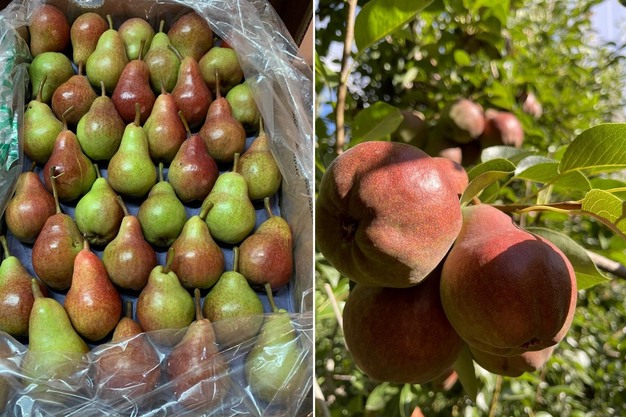 © Emelka
In the United States, the main competitor is Chile at the start, and then the local production, depending on the stocks available. In Europe, however, the scenario has changed structurally. "In the past, Argentina arrived in a market with no local pears. This has changed, and today Europe is self-sufficient all year round," says Sabbag. Therefore, the European market has become more of a niche destination, with a focus on certain varieties, sizes, and high-quality fruit.
Argentina has pears available all year round thanks to controlled atmosphere technology, although overseas exports drop in May, when harvests in the Northern Hemisphere begin.
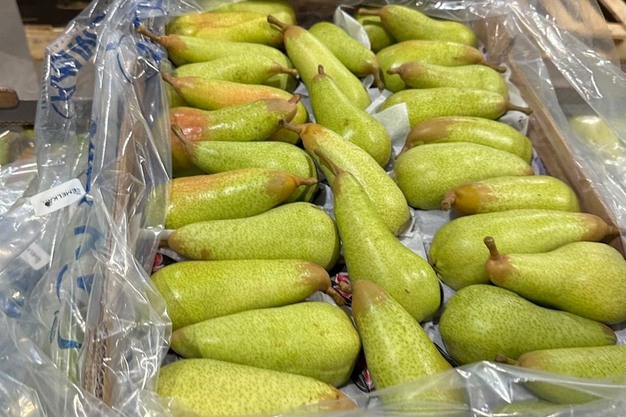 © Emelka
From a structural point of view, Sabbag highlights the sector's strengths and challenges. "Argentina is blessed to have the best pears on the planet," he says, highlighting how the Rio Negro valley has the right climatic conditions and plenty of water, which allow the production of clean and good-sized fruit. However, he also acknowledges that competitiveness is affected by the distance to markets and high internal costs.
Despite the complexity of the situation, the manager remains optimistic. "Every year, we use up our stocks, and we are really short of fruit. We don't have a problem with sales; quite the opposite, in fact," he says. The falling supply in the Southern Hemisphere and the high entry barrier (a commercial plantation needs around eight years) reinforce his vision of future stability.
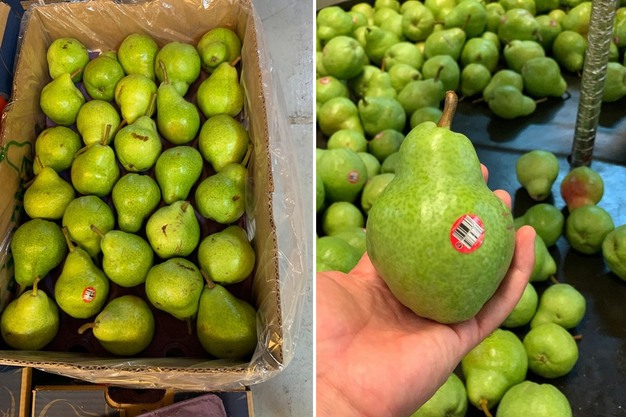 © Emelka
As far as prices are concerned, Sabbag foresees stability during the season: "Given that there isn't so much fruit supply in general in Argentina, I'm optimistic about the prospect of prices remaining stable this year."
"In addition to consolidating its position in traditional markets, the company sees opportunities for growth in India and China, especially in the Indian market, considered to be one of the most promising in the medium term," he says.
 For more information:
Ariel Sabbag
Emelka S.A.
Argentina
Tel.: +54 9 2984 53 7013
[email protected]
https://emelka.com.ar