In Zapponeta, a town in the Apulian province of Foggia, organic farming is not a recent trend but a long-standing tradition. Located a short distance from the Adriatic Sea and nestled at the foot of the Gargano promontory, the region boasts a long history of sustainable farming practices. It is from this unique pedoclimatic context that Mastropasqua International S.p.A.'s experience takes shape. Today, the company is a model of generational continuity applied to sustainable innovation. Laura Mastropasqua, the third-generation family member at the helm, explains that the company's strength lies in the consistency between its historical identity, production method, and market vision.
Founded in 1960 by Matteo Mastropasqua, the company originally focused on agriculture and was closely bound to the land. Carrots, potatoes, onions, and wine have always been the company's signature crops, and it has always valued local traditions. The transition to an S.p.A. has not altered this approach but has made it more structured and competitive.
 © Mastropasqua International Michele, Laura, and Giulia Mastropasqua
Under the leadership of the second generation, with Michele Mastropasqua as CEO and Rosa Mastropasqua as head of administration, the company expanded its surface area, strengthened its production processes, and gained a stable presence in foreign markets. This consolidation phase paved the way for the third generation's arrival. "Our task today," explains Mastropasqua, "is to translate the family's agricultural heritage into a language that is comprehensible to international markets without losing authenticity."
Organic farming as a strategic asset
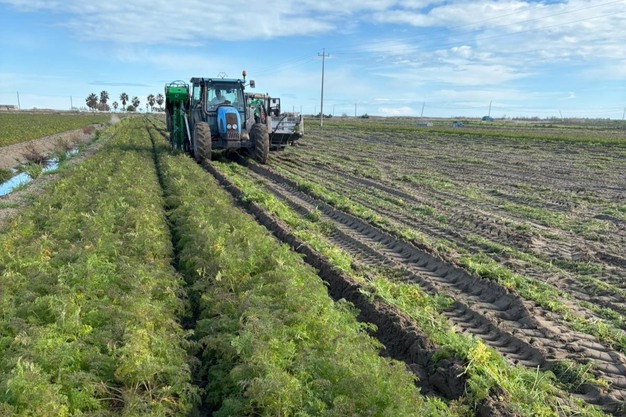
For over 25 years, Mastropasqua International has embraced organic farming as the foundation of its production model. It's not just a commercial strategy, but a company philosophy that informs every agronomic and industrial decision. "For us, growing organic means respecting the soil, natural resources, and the end consumer. It is a responsibility we feel as producers and entrepreneurs," emphasizes Laura Mastropasqua. Mastropasqua International grows carrots, potatoes, and onions across 100 hectares.
 © Mastropasqua International
The adoption of organic farming techniques, the absence of synthetic chemicals, the use of organic fertilizers, and crop rotation are complemented by a third-party certification framework, including GLOBALG.A.P., which enables the company to work with the European large-scale retail sector in line with shared and widely recognized standards.
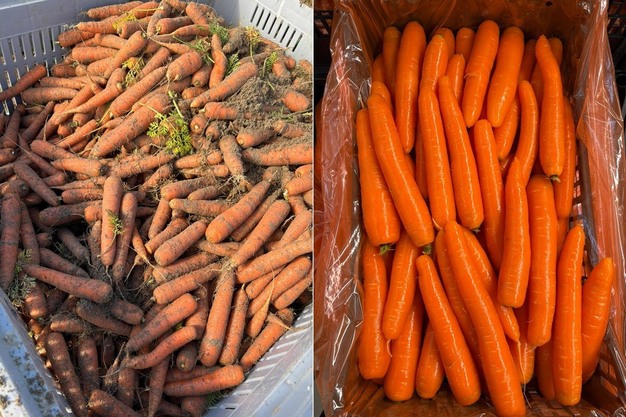
Carrots are undoubtedly the flagship product among Zapponeta's fruit and vegetable crops. The organic carrots grown in this area are cultivated in sandy coastal soils, known as arenili, which promote consistent taproot development and drastically reduce deformities. The mild, consistently breezy maritime microclimate enables staggered sowing and harvesting over several months, ensuring a steady supply of top-quality produce. This represents a significant competitive advantage in a market that demands standardized products.
 © Mastropasqua International
"Compared to the same period last year, the marketing of organic carrots has slowed down," explains Mastropasqua. "Demand levels are significantly lower, and the market is calm overall, showing no signs of a short-term recovery." This reflects a cautious attitude among trade and distribution operators, who are handling limited volumes and planning purchases more cautiously than in the past. They are waiting for greater stabilization of consumption and clearer market signals."
The Italian market, particularly in the north, remains central. However, Mastropasqua International's exports to Austria, Germany, France, and the Netherlands demonstrate its ability to meet European demand for high-quality organic vegetables. In a sector where sustainability, traceability, and reliability are prerequisites, the Apulian company is a dependable partner.
 © Mastropasqua International
Quality extends beyond cultivation
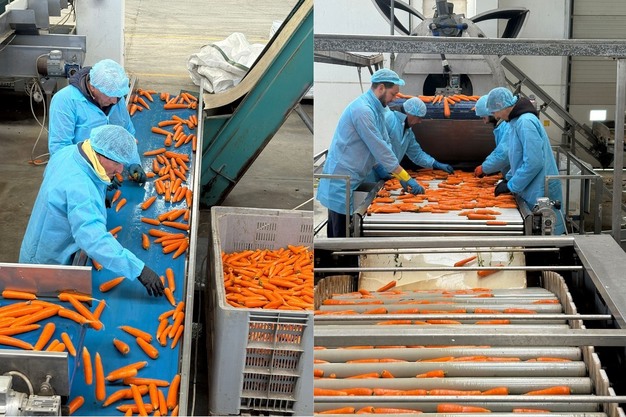
Every stage of the process, from harvesting to processing, is subject to strict controls. These include phytosanitary monitoring, washing, selection, packaging, and storage in temperature-controlled refrigerated cells. Only compliant roots enter the commercial circuit, primarily in 10-kilogram crates intended for professional markets. "Our goal is to provide a product that meets the needs of buyers and distributors without compromising on quality," he says.
"The challenge for our generation," Laura Mastropasqua concludes, "is to show that tradition and innovation are not opposites, but rather part of the same agricultural project. If organic has become a market driver, it is because someone chose it before it was commonplace."
For more information:
Mastropasqua International S.p.a.
Strada Provinciale 66 per Trinitapoli Km.13.300
71030 Zapponeta (FG) - Italy
+39 0884 520011
mastropasquainternational.com