Witlofkwekerij LOF is a Dutch family business that, over 60+ years, has grown into a fully integrated chicory farm with international sales. The family's third generation, Hugo Jongejan and his brother-in-law Gerwin de Vries, now run the company. Despite its expansion, one principle remains crucial: "At its core, it's still people work. Without staff, we can't do anything," says Hugo.
 © Witlofkwekerij LOF
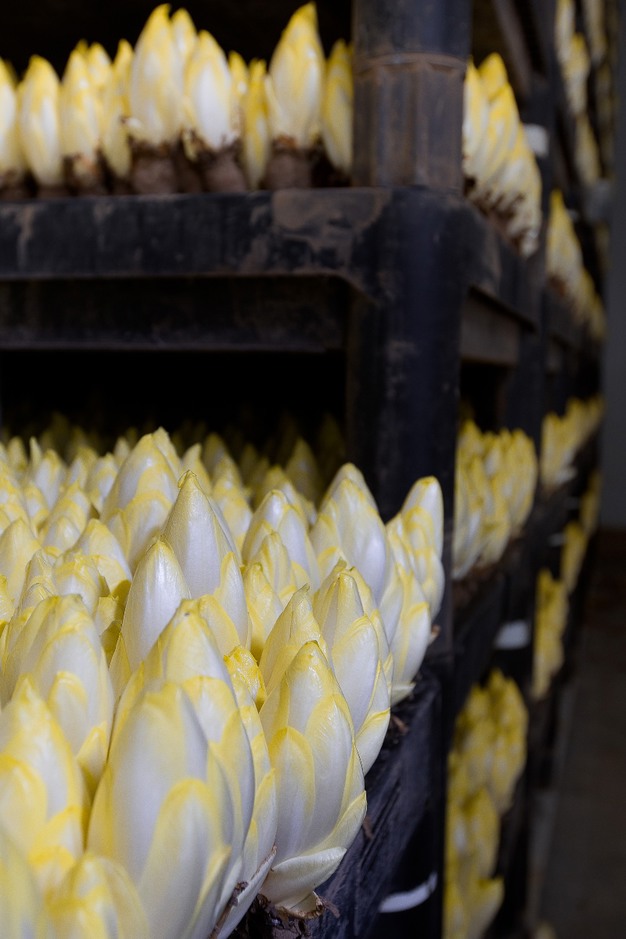 © Witlofkwekerij LOFThe company dates back to the 1950s, when Hugo's wife's grandfather started a mixed farm. He planted his first chicory 20 years later, and by the end of the 1980s, the farm had switched entirely to that crop. Entrepreneurship and innovation have been the common thread ever since. That became apparent when Hugo's father-in-law, Jan, saw opportunities in East Germany after the fall of the Berlin Wall. What started as an exchange of knowledge grew into a solid export of chicory roots, now an important LOF pillar.
Growth via optimization and acquisitions
LOF professionalized further in the last decade. An important step was acquiring a German nursery, a former customer that had run into difficulties. With its own roots and a process redesign, that location became profitable again. LOF now operates at two sites in Germany. In the Netherlands, too, the company expanded by taking over Koelvries Creil, gaining complete control over the sorting and storage of (organic) chicory roots.
 © Witlofkwekerij LOF
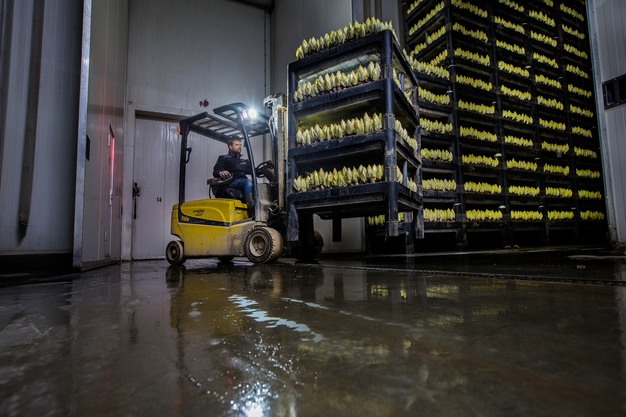
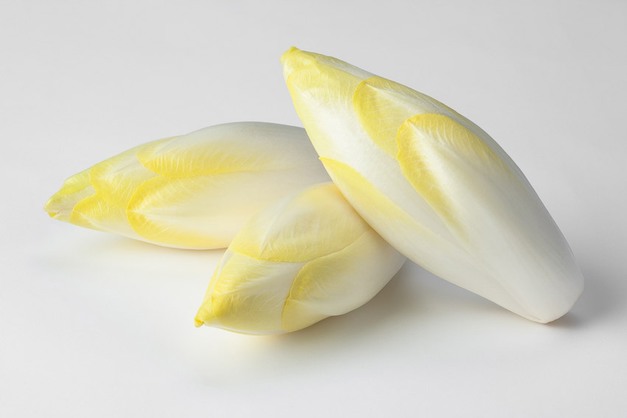
The company manages almost the entire chain, from root cultivation, storage, and harvesting to sorting, packaging, and logistics. Only the seeds are purchased. "That allows us maximum control over quality and volumes." The roots are sold through Flevolof, with around 70% going abroad. They sell most of their fresh chicory via ZON, mainly in the Netherlands.
Market under pressure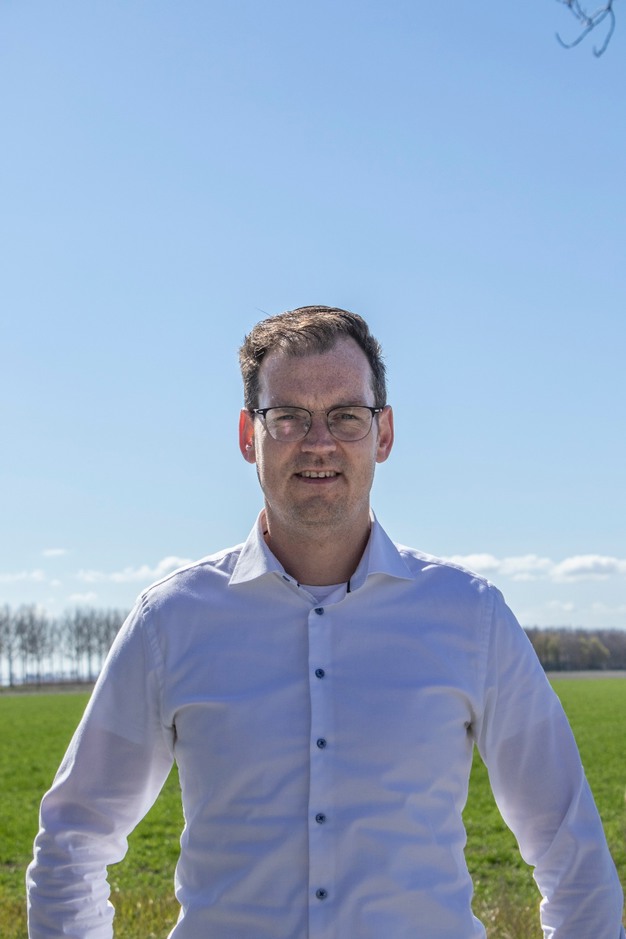 © Witlofkwekerij LOF
Although demand is stable, the sector is under pressure. Fewer available crop protection products make for more challenging cultivation. "Leaf miners and Phytophthora require constant attention," says Jongejan. Plus, price fluctuations cause uncertainty. "A 10% increase in roots can lead to 40% lower prices." He prefers a stabler market, "so everyone can earn a fair living."
Sustainability, residual flows, and the future
LOF, which has been entirely gas-free since 2010, reuses residual cold storage heat, has 1,200 solar panels, and collects rainwater. Residual flows are also given attention: marketable chicory is sent to the food bank, but better uses for chicory leaves are still being sought.
The company sees a future in robotization. "That will be commonplace within five to six years," Hugo expects, especially regarding planting and harvesting roots. LOF's focus, however, remains crystal clear: responsible, gradual growth. "But above all, the human dimension is always paramount. With a good team, you can do anything," Hugo concludes. (JG)
For more information:
Witlofkwekerij LOF
Pilotenweg 28/1
8311 PL Espel
Tel: +31 (0) 527 271 616
[email protected]
www.witlofkwekerijlof.nl