With water supply tightening across Australian horticulture, orchard management strategies to reduce water use were a key focus at the XI International Symposium on Irrigation of Horticultural Crops held in Tatura, Victoria, in January.
Participants discussed precision irrigation, netting, mulching, canopy and crop load adjustments, and the use of water-efficient genetics as potential responses to hotter and drier conditions, combined with increasing competition for water resources.
Jenny Learmonth, Senior Manager for Rural Water Policy at the Department of Energy, Environment and Climate Action, noted that a warming climate, expanding horticultural production, environmental water buybacks, and delivery constraints are likely to intensify pressure on available water.
 © Agriculture Victoria
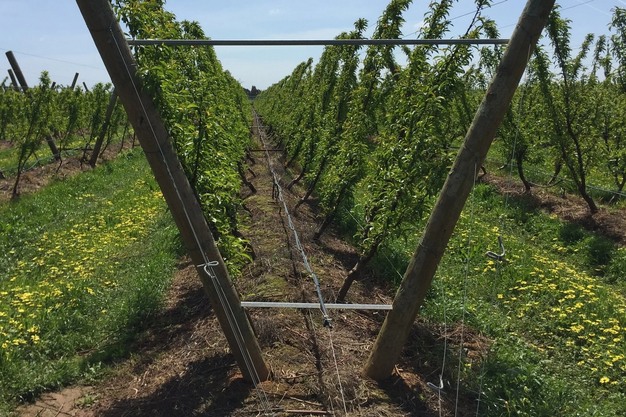
Investment in precision irrigation was highlighted as one option, provided systems are carefully designed and economically justified. Ardmona grower Matt Lenne described his shift from flood irrigation to a pressurised microjet system across 53 blocks, supported by soil moisture probes installed at 10 cm intervals down to 50 cm depth.
"Some schedules are only on for two hours, others are on for four to get to the depth I want to get to," he said. "In real time, I can see the water hit where it has to be. I'm using less water, and I'm not overwatering as much as I used to."
Matt emphasised system design and practicality. "I want to grow fruit that I can sell," he said. "That's my job, to get the right size, the right colour fruit to sell to maximise my outcome. To do that effectively, with irrigation water, the technology doesn't have to be mind-blowing; it just has to do things on time and water the right amount to get that crop home."
On investment decisions, he added, "I'm not going to rush out and overspend on technology that doesn't improve my outcome. I'll spend money on advice, and I'll spend money on improvement technology that gives me an outcome, not on feel-good technology."
Meir Goldstein of Goldtec Control Systems stressed measurement as a starting point. "How can we convince people to put on less if they are not confident of what they are putting on?"
 © Agriculture Victoria
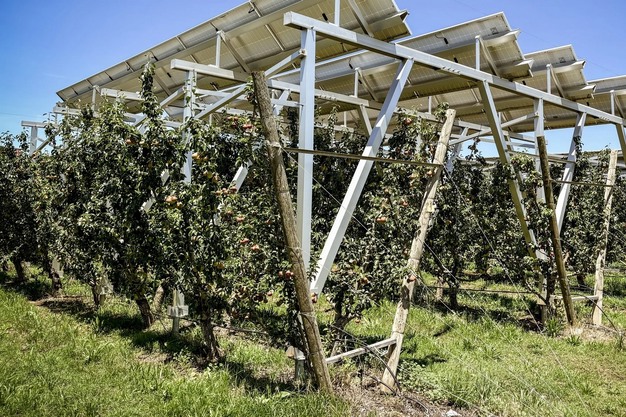
Dr Diego Intrigliolo of Spain's Desertification Research Center outlined combined strategies such as regulated deficit irrigation, shading, mulching, and selecting varieties or rootstocks with lower water demand. "I guess we have to use a combination of strategies," he said.
Discussion also included crop thinning, canopy reduction, and temporarily reducing inputs on selected blocks. Tony Filippi of ANFIC said, "It's about business survival. The bucket will be smaller, the price will be higher, and we are going to be producing with less water. Decrease water use with canopy management and modern canopies."
Research presented at the symposium pointed to improved sensors, better data for decision-making, and more autonomous irrigation systems as areas for further development.
 © APALFor more information:
APAL
Tel: +61 3 9329 3511
Email: [email protected]
www.apal.org.au