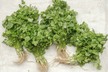
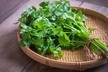
Coriander supplies in Australia are currently under pressure following extreme weather conditions in key growing regions. Fresh bunches are listed as out of stock in several supermarkets, with limited availability across retail channels.
Coriander, also referred to as cilantro or fresh coriander, is highly sensitive to weather conditions. Most commercially grown coriander for the Australian fresh market is produced in Melbourne and Heatherton in Victoria, and in Adelaide and the Riverland in South Australia. A heatwave in January, combined with heavy rain and humidity, affected crop performance. Coriander grows rapidly and is prone to wilting, which limits field resilience under high temperatures.
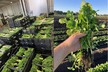
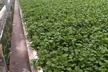
Greenhouse production has partially supported supply, alongside imported volumes. However, fresh coriander has a short shelf life even under favourable conditions. Retailers have adjusted packaging formats to extend shelf life. At Coles, coriander is being packed in plastic containers and stored on chilled shelves. Price promotions have been used to accelerate turnover, with coriander sold at US$3.78 for two 15g packets. Fresh bunches are listed at US$2.08 each at Woolworths.
When a product is discounted to manage shelf life, grower returns may decline. Dried coriander formats are also reported as temporarily unavailable in some stores.
Josh Ball, co-founder of Farmers Pick, commented on the speed of the supply chain response. "Fresh food doesn't behave like manufactured goods. You can't slow it down, store it indefinitely, or switch supply on and off; you're working to nature's timing, not a production schedule."
Coriander is used as both a cooking ingredient and garnish in products such as salads, tacos, salsas, curries, soups, and chutneys. Supplies are expected to stabilise as temperatures moderate later in the season.
In Australia, the term coriander generally refers to the fresh leaves and stems, while coriander seeds are used as a dried spice. Approximately 20 per cent of the population reports an aversion to coriander due to a genetic variation in the OR6A2 olfactory receptor gene, which increases sensitivity to aldehyde compounds.
Source: Honey Kitchen (nine)