Citrus production in Syria's coastal Tartous province remains a central component of the local agricultural economy, with annual output estimated at around 146,000 tons, according to provincial agriculture officials.
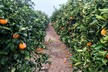
Around 9,200 hectares are planted with citrus trees across the province, representing approximately 3.4 million trees. Citrus is the second-largest agricultural crop in Tartous after olives. Orchards are located around Tartous city and extend to Safita, Dreikish, Banias, Sheikh Badr, and Qadmous.
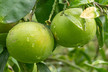
According to Mohammad Ahmad, director of agriculture in Tartous, production is spread across several citrus categories. Oranges account for about 39% of total output, followed by lemons at 37%, mandarins at 16%, and grapefruit at 8%. The harvest includes early-season varieties such as Abu Surra and Satsuma, alongside later varieties including Valencia oranges and white grapefruit.
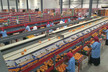
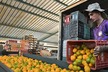
Part of the crop is sold on the domestic market, while the remaining volumes are exported following sorting and packing. Ahmad noted that during peak harvest periods, increased supply often coincides with lower prices, which can reduce returns and, in some cases, result in fruit not being harvested.
To support production, agricultural authorities have introduced biological pest management measures. These include the free distribution of natural predators and fruit fly attractants. Officials said these tools aim to limit crop losses while reducing reliance on chemical treatments. Despite these measures, citrus output remains exposed to climatic factors.
"Frost affects late-season varieties, while drought reduces water levels in reservoirs," Ahmad said. He added that water shortages can result in smaller fruit size, reduced juice content, and lower market value.
Farmers report that total production volumes have remained broadly stable this season despite ongoing logistical and infrastructure constraints. Samir Jabbour, a grower from Blata al-Gharbiya village, said that improved market prices this year helped offset challenges experienced during the previous summer, including electricity interruptions and limited water availability.
Agricultural officials stated that extension services and field-level workshops are continuing in coordination with farmers' unions. These programs are focused on maintaining output levels and improving fruit quality, while growers continue to face rising input costs across the production cycle.
Source: SANA