La Unió Llauradora has called on the Spanish Government to ask the EU to set limits on annual fresh citrus imports and citrus for industry from Mercosur countries at 239,000 tons and 499,000 tons, respectively, should the EU-Mercosur agreement be approved. They also seek a 15% corrective tariff if these volumes are surpassed. The organization reiterated its opposition to the trade agreement and warned that provisional implementation before the European Court of Justice's ruling "would be lethal even with corrective measures for the European and Valencian citrus sector."
The agreement sets tariff quotas and protection measures for certain sensitive products. However, citrus fruits, a key and sensitive sector for many European producing regions, lack any specific quota. This inconsistency within the agreement is especially problematic given the current situation, which includes the EP's request for an ECJ opinion, discussions on temporarily implementing the agreement, and the combined effects of other active trade agreements.
 © La Unió
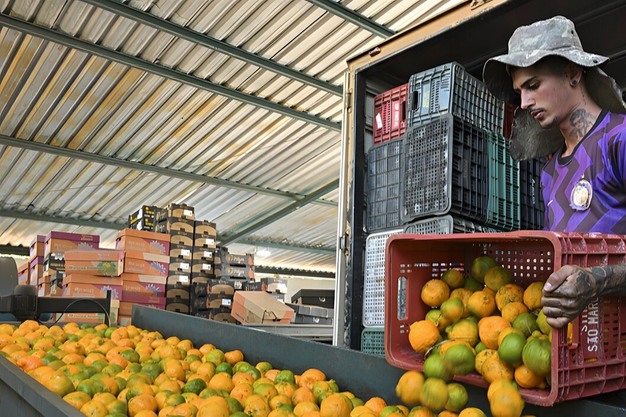
Average annual citrus imports from Mercosur are approximately 239,000 tons. When adding imports from other agreements, such as the EU-Southern African Economic Partnership Agreement, especially with South Africa, which averaged around 794,500 tons per year from 2020 to 2024 and 954,490 tons from January to October 2025, these figures rise considerably. The European market cannot sustain these levels indefinitely without causing major disruptions, particularly since these imports often arrive at the start of the European season (September to November).
According to La Unió, treating fresh citrus like other sensitive products would require an annual quota at least equal to the current average imports of 239,000 tons. Additionally, a 15% corrective tariff should be applied once this volume is exceeded, along with a monthly safeguard during the most sensitive months.
In the case of processed citrus, the Mercosur bloc, especially Brazil, primarily dominates the European juice market, with average annual imports of about 900,000 tons, sometimes exceeding 1,050,000 tons, as in 2023. Brazil supplies 70% of the world's orange juice. Despite its significance, this product isn't considered sensitive in the agreement, even though the European processing sector accounts for about 20% of citrus production and plays a crucial role in managing fresh supply, employment, and regional economic activity. Each year, Spain diverts between 650,000 and 850,000 tons of citrus from the fresh market into juice production.
 For more information:
Carles Peris
La Unió
Tel: +34 658 92 89 23
Email: [email protected]
https://launio.org