[Editor's note: This article was written at the end of December 2025 and initially published in the international edition of Primeur magazine dedicated to Fruit Logistica 2026. Changes have since occurred in the 2025/2026 season for Egyptian oranges. Exporters have encountered surprisingly weak demand for Navel oranges, which can be explained by colder-than-usual weather and snowfall in several parts of the world. One exporter summed up the situation by saying, "The market has simply chosen to skip Egyptian Navel oranges this season." The information in the article remains useful with regard to the current Valencia orange season, which has seen a significant improvement in demand, and reflects the mood of Egyptian exporters and their preparations at the start of the season.]
"Our marketing plan for this season has changed given better conditions"
A new season began for fresh Egyptian oranges in mid-December and is expected to last until June, a long season this time around. The industry has been struggling and has been affected in recent seasons by several changes and problems, even crises, such as the cut in export subsidies, small sizes, the Red Sea crisis, the supply crisis since the brief boom in the domestic processing industry, and much more. On the other hand, export performance has shown resilience, partly due to the difficulties encountered by competitors and the maintenance of significant export volumes (1.9 million tons of oranges exported at the peak of 2023/2024), even if the price is sometimes a zero-margin campaign for many exporters.
This season, despite a surprisingly late start, looks set to be "normal." Many Egyptian growers and exporters expect a return to calm, both on the domestic and international markets. The crisis in the Red Sea appears to have been resolved in recent days, although peace in the Middle East remains very fragile. In any case, logistics providers and exporters have fine-tuned alternative shipping routes and longer fruit shelf life. The race to source fresh oranges is less intense than last season, as domestic processors have taken a back seat. Fruit sizing is also better this season, which bodes well for good prices and balanced exports across markets.
 © fruitlink
Adapting marketing plans to healthier working conditions
Ahmed Ghoneim, marketing director of the Egyptian export company Fruit Link, explains that his plans for the season have changed, allowing him to seek value rather than deal with crises and barriers, reflecting more peaceful working conditions. He states, "Our marketing plans for this season have changed, given better conditions, but also the delay in the season's start. We now focus more on countries that import large-sized oranges and forecast increasing export volumes to these destinations, such as the Gulf countries and Northern European markets. We are also banking on a significant increase in the quantities exported to Latin American markets."
It will take some time for the entire value chain to assimilate this return to normal, according to Ghoneim. He explains: "The fundamental commercial difference this season is a return to normal pricing. Some growers mistakenly believe they can obtain a high price similar to last season's, unaware that the main factor behind last season's price increase was the rise in the international price of juice, which rose from $8,000 to $9,500 per ton between February and May. However, juice price fell sharply at the end of last season and is stable at $3,000 currently, affecting the price of raw oranges on the Egyptian market. I think it will take some time for Egyptian farmers to resign themselves to accepting this situation."
 © fruitlink
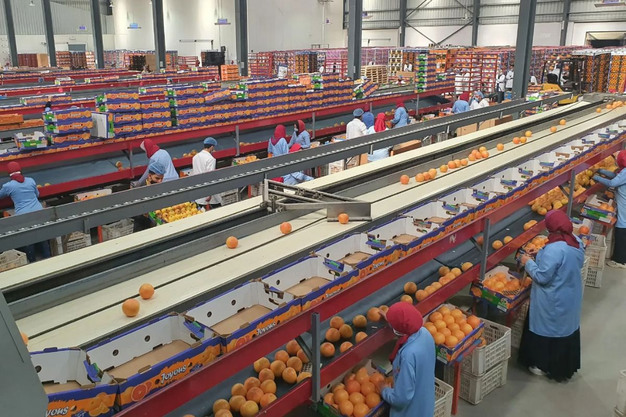
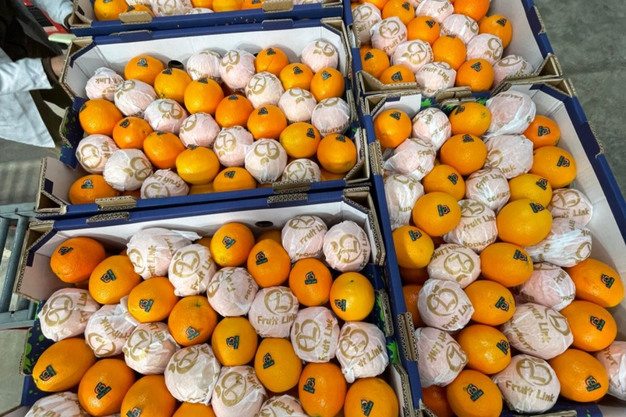
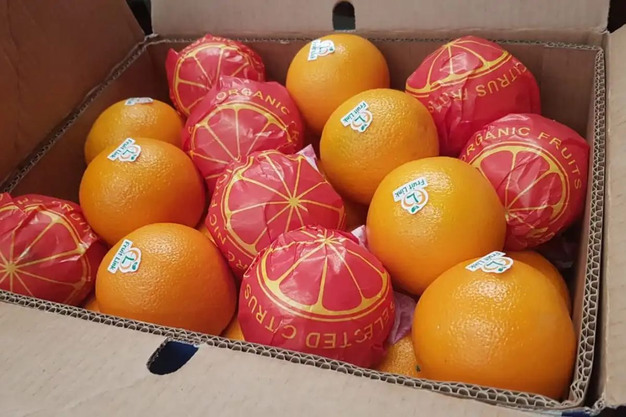
Egyptian exporters are thus daring to embark on a dynamic export campaign that is not hampered by commercial, natural, and geopolitical uncertainties. Ghoneim shares a glimpse into his work at Fruit Link, or what a typical week looks like for an Egyptian exporter during this season. "As the marketing manager at Fruit Link, I spend my week reviewing global market reports to learn about the latest trends in supply and demand, monitoring price movements in target markets, analyzing competitors and how they present their products, and compiling a report on the findings to share with the export manager so we can capitalize on export opportunities at the best time. I develop a weekly content plan and ensure that it is in line with monthly and annual marketing plans, then analyze engagement rates. The content plan is important because it ensures that our brands are presented in the desired manner and promotes a visual identity that reflects the quality of Egyptian products, especially given the strong competition in this area from Spain and South Africa. I also spend a considerable time meeting with customers online to strengthen existing relationships and establish new long-term partnerships that suit us. Preparing for international exhibitions and ensuring maximum benefit from participation in them are also an important part of exporters' work."
 © fruitlink
An outlook on the competition considered favorable to Egypt
Thanks to better sizing, smoother logistics, and prices unaffected by the processing industry, Ghoneim says he believes that Egyptian oranges will regain their full competitiveness this season. He explains expected competition dynamics: "All varieties of Egyptian oranges hold a strong position in global markets, even against renowned international competitors such as China, Spain, South Africa, Morocco, and Turkey. In the Asian market, this year's abundant orange production in China, as well as in Uzbekistan, has created strong competition in key markets such as East Asia, which has had a significant impact on export volumes to these countries and will continue until March or even April. The long orange season in South Africa last year, with a continuous flow of large quantities, along with a delay in the natural coloring of oranges in Egypt due to weather conditions, will naturally affect the flow of Egyptian oranges from the beginning of the season until February 2026. However, after that, namely during the Valencia orange campaign, we expect better opportunities with the end of the Chinese season and the rise in the price of Spanish oranges and their season. We therefore have every reason to believe that the competition will become significantly more favorable for Egypt this season."
Risk factors to monitor
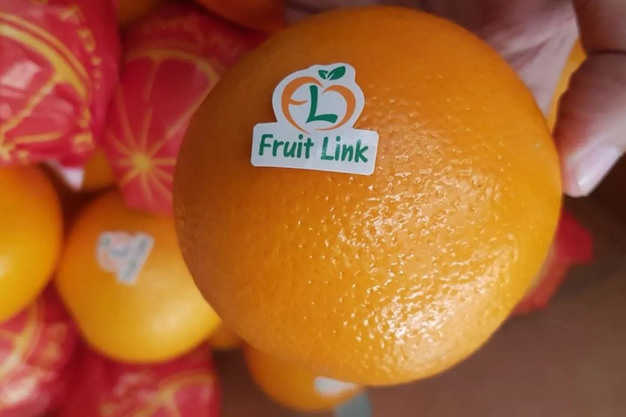
The exporter nevertheless apprehends persistent or latent challenges, as recent seasons have demonstrated the eventfulness of Egypt's orange industry. Ghoneim admits that he is not entirely confident about the role of the processing industry, which could experience a sudden surge at any time. He adds: "Supply fluctuations driven by manufacturing industries (juice and concentrate factories) could continue to cause some price instability and sometimes lead to unreasonable or unacceptable prices in foreign markets. This problem can be overcome by entering into long-term contracts from the outset. Even for exporter-owned farms, regardless of their size, it is still necessary to use external suppliers to cover all contracts and agreements with clients."
 © fruitlink
Payment terms in Russia, the third largest destination for Egyptian oranges, are also a headache. Ghoneim says, "Restrictions on the Swift system in Russia, as well as on transfers in dollars and euros, have led to difficulties in settling payments between Russian importers and Egyptian exporters, which has had an impact on Russian demand, a market that is considered one of the main markets for Egyptian oranges. However, the Egyptian government is now working to resolve this issue and find alternative mechanisms to maintain our presence in the Russian market."
"We must also closely monitor the competition and understand that the only way to gain the upper hand is to ensure quality and continuous improvement. With the strong reputation that Egyptian oranges have built over the past years, commitment to the required specifications, offering prices that are acceptable to the foreign market, and using recently developed methods in all stages of cultivation, packaging, and shipping, Egyptian oranges will continue to have priority," Ghoneim concludes.
For more information:
Ahmed Ghoneim
Fruit Link
Tel: +20 11101 16206
Email: [email protected]
www.fruitlinkco.com