The Brazilian government has concluded negotiations with Turkish authorities that will allow exports of Brazil nuts, both in shell and processed, to Turkey. The agreement opens a new destination for the product and adds to Brazil's recent market access activity.
Brazil nuts are harvested through extractive systems by traditional communities and are positioned internationally as a product with nutritional value. Access to the Turkish market is expected to support income generation in producing regions and contribute to regional development linked to forest-based supply chains.
Trade data show that in 2025, Turkey imported more than US$3.2 billion in agricultural products from Brazil. These imports were mainly concentrated in the soybean complex, coffee, and fibre and textile products. With the inclusion of Brazil nuts, the trade portfolio between the two countries is expanding.
The opening forms part of broader market access efforts. Since the beginning of 2023, Brazilian agribusiness has recorded 535 new export market openings. The negotiations were conducted through joint work between the Ministry of Agriculture and Livestock and the Ministry of Foreign Affairs.
Additional destinations have also been approved recently. Last week, Myanmar authorised imports covering Brazil nuts as well as peanuts, sesame, baru nuts, and coffee seedlings. In 2025, Myanmar imported more than US$38 million in agricultural products from Brazil.
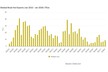
Brazil's Brazil nut production totals around 35,000 tons. According to data from the Brazilian Institute of Geography and Statistics, the state of Amazonas is the country's largest producing region, with around 11,500 tons harvested in 2024.
Production is expected to recover in the 2025/2026 cycle following reduced volumes in the 2024/2025 harvest, which was affected by drought conditions in the Amazon region.
Brazil nuts are part of the country's socio-biodiversity economy. The crop is collected in managed forest areas by local communities, providing a source of income linked to standing forest use. While Brazil plays a role in global supply, its share of value-added trade remains limited.
In 2022, Brazil accounted for around half of global exports of shelled Brazil nuts, with world trade valued at US$25.5 million. In contrast, in the processed segment without a shell, where the global market value is around 12 times higher, the Brazilian product represents less than 10 percent of the total international trade.
The new access to Turkey adds an additional outlet for both shelled and processed Brazil nuts as the sector looks to rebuild volumes and strengthen its export position.
Source: CNN Brasil / LNG