Africa has an estimated 33 million small-scale farms producing close to 70 per cent of the continent's food supply, yet rural poverty remains widespread in South Africa. According to Macadamia farmer and Madimbo Agri Group CEO Gene Likhanya, limited technical and business knowledge continues to restrict long-term farm viability.
"I know farmers who have been farming for 15, 20 years, but haven't managed to make much out of it. They just never understood the value chain and what is required for a product to be acceptable in the market," says Likhanya.
Based in the former Venda region of Limpopo, Likhanya began macadamia production in 2005. He attributes early progress to learning from neighbouring growers with established orchards. "When I started in 2005, I didn't know how macadamia was priced. I didn't know how it was processed. And I couldn't go to the internet to ask questions. I had to go to my neighbour, who had trees that were older and more established," he says.
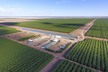
Through mentorship and reinvestment, his operation expanded from 2.5 hectares to 17.5 hectares under macadamia and spinach. "The higher the production, the cheaper the processing costs and the more leverage on pricing," Likhanya explains.
Further scale followed support from the SAB Foundation after an introduction at a farmers' indaba in 2019. "I just took a gap and went to introduce myself, what I do, and the problem I was trying to solve. And that is when the relationship with the SAB Foundation started," he says. With added capital and guidance, Madimbo Agri expanded to 30 hectares.
The next phase focused on collective development through a farmers' consortium. "We needed to make sure that Gene had the right business processes in place to operate as a formal business, which could spearhead the group for collective success," says Itumeleng Dhlamini, head of programmes at the SAB Foundation.
Likhanya now mentors 12 macadamia farmers, each supported to expand to five hectares with assistance for land preparation, water access, seedlings, and infrastructure. One participant, farmer Aluwani Mulaudzi, says the programme addressed basic production constraints. "Through the SAB Foundation's support, we now have the irrigation system we need to water our plants, we have a storm house, we have a reservoir, and we have electricity with solar backup," she says.
Likhanya says the objective is to strengthen local capacity through shared knowledge. "It is useless if we can't use it as a community to empower each other's lives," he concludes.
Source: BizCommunity