Better prospects are on the horizon for Morocco's watermelon sector, with the Moroccan government officially announcing the end of the drought that has affected the country for seven consecutive years. The drought has previously led to restrictions and even bans on the production of this fruit in several regions. Growers are now confidently preparing for the 2026 season, putting this fruit back at the forefront of this year's Moroccan campaign, according to Said Aghzou, CEO of Valyour.
Better rainfall
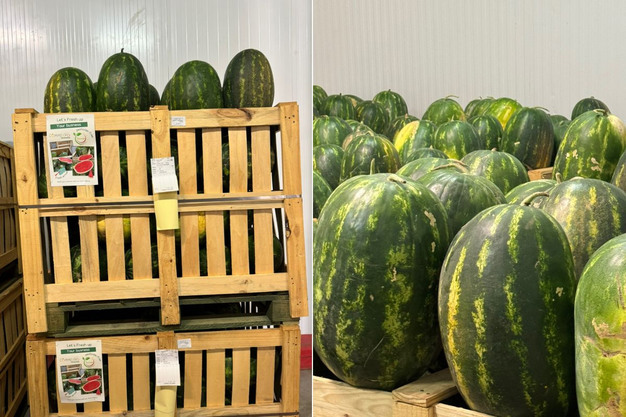
According to its CEO, Valyour has made watermelons one of the main products in its portfolio this season, following a marked improvement in production conditions and encouraging market prospects. He explains: "The outlook is much more positive. Thanks to recent rains, water reserves have improved, with approximately 52% of the nationwide capacity and 53% in the Souss-Massa region. We will launch our production in several Moroccan regions in order to guarantee substantial volumes and spread climate risks."
 © Valyour
Attempted ultra-early season
The 2026 season for Moroccan watermelons was preceded by attempts at ultra-early production in order to test the potential of Morocco's vast Saharan region, which offers considerable early ripening. Aghzou summarizes the results of this trial: "From an agronomic point of view, the early harvest trials as soon as December proved technically successful. However, from a commercial point of view, this early harvest found no buyers for export. Weather conditions in European markets remain wintery at this time of year, so consumption is very low and no major retailer has confirmed any purchase plans. The harvested volumes were therefore sold on the local market, which does not allow the costs of such early production to be recouped. At this stage, a Moroccan harvest in December is therefore not relevant for export.
Moroccan growers will still rely on Mauritanian production
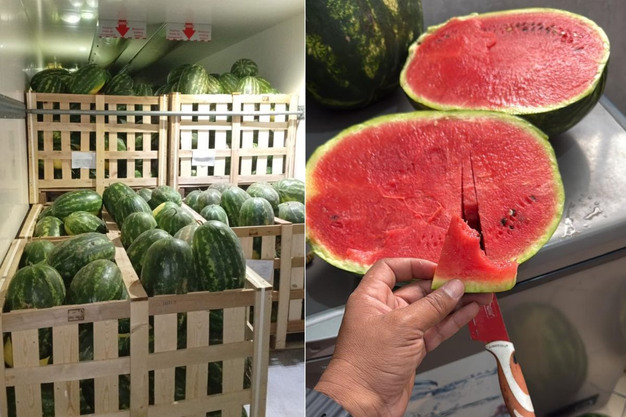
Early production being commercially unsustainable, despite improved weather conditions, would result in greater complementarity with the Mauritanian watermelon season, according to Aghzou. To recall, the long drought in Morocco has prompted many Moroccan growers to relocate all or part of their production to neighboring Mauritania, a boost for the Mauritanian export industry that is not about to be reversed. Aghzou cites Valyour's approach as an example of production trends: "In order to meet customer demand during the Ramadan commercial window (February 10 to March 30), we have established a partnership with Mauritanian producers. This approach allows us to ensure commercial availability in line with the consumption calendar, while guaranteeing quality and consistency, without taking the risks associated with extremely early production in Morocco."
 © Valyour
Pressing phytosanitary issues
It remains to be seen how the phytosanitary factor will shape the 2026 season, after viruses, thrips, and high MRLs have affected production in several Moroccan regions in recent years. Aghzou acknowledges that "phytosanitary pressure has indeed increased in recent years," but explains that "the public authorities have strengthened their response."
"The Moroccan food safety authorities have implemented an intensive national MRL control plan covering the entire production chain. Testing in accredited laboratories was stepped up in 2024 with 5,700 samples tested, and 6,000 in 2025. Residue testing is now mandatory for each batch exported prior to certification. Moroccan watermelons generally comply with health standards, with no significant alerts reported in the European RASFF system since early 2025. These actions are accompanied by training programs for growers and upstream work on selecting more resistant seeds to reduce chemical pressure while effectively protecting crops," Aghzou continues.
 © Valyour
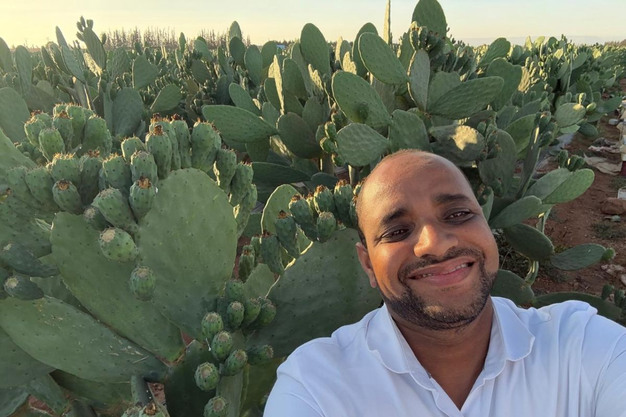
"All in all, we have every reason to believe that watermelon production and exports will grow this season. Watermelons will be at the heart of our summer fruit campaign, which will be reflected in our participation at Fruit Logistica this year, alongside prickly pears, which are also experiencing an upward trend in production and demand," the grower concludes.
Valyour will be exhibiting at Fruit Logistica at Hall 22 G-50.
For more information:
Said Aghzou
Valyour
Tel: +212 6615 52683
Email: [email protected]