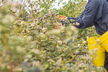
For the second consecutive year, a blueberry grower on St. Helena Island is preparing for a winter storm well ahead of the harvest period. Cal Hucks of Coosaw Farms said the operation expects impacts as farmers and residents across the Lowcountry prepare for a winter storm forecast from Saturday through Monday. The National Weather Service in Charleston reports that cold Arctic air is expected to reach coastal South Carolina, where winters are usually mild. As of Wednesday, it was still unclear whether freezing rain or snow would affect the coast. Forecasts point to ice accumulation as the main risk, with overnight lows expected to fall into the mid to upper 20s.
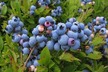
Coosaw Farms is South Carolina's largest blueberry producer, with main production areas in Fairfax and on St. Helena Island east of Beaufort. The farm's blueberries bloom each spring ahead of the April harvest, making early winter cold a risk factor for yield development.
It is the second year in a row that extreme winter temperatures have required Coosaw Farms to deploy frost protection measures. The blueberry bushes were planted eight years ago and are protected during cold events through a frost protection system that pumps water onto the plants. As temperatures drop, the water freezes and forms an insulating ice layer that helps limit cold damage.
A year ago, several inches of snow fell across the region for the first time in seven years, putting an estimated 100,000 blueberry plants at risk. The farm activated frost protection throughout the event, and according to Hucks, the system functioned as intended.
"We might have lost 10% potential yield," Hucks said. "All in all, we count that a success because we could have lost 50%."
This season, Coosaw Farms began frost protection late last week in response to cold overnight temperatures. With another storm approaching, Hucks expects the farm will need to maintain frost protection operations for an additional eight days starting Sunday. In a typical winter, frost protection is usually required for around three days.
"Everything is cyclical," Hucks said. "We've had a couple warm years, and we've had a couple of cold years."
The extended frost protection period highlights how weather variability continues to affect open-field berry production in regions not accustomed to prolonged cold exposure, requiring operational adjustments well ahead of harvest.
Source: The Island Packet