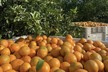
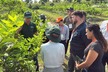
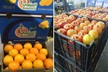
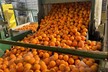
Kinnow cultivation has been practiced in India's Sri Ganganagar district for several decades, and the planted area has continued to expand. In 2015–16, kinnow orchards covered 7,380 hectares. This has since increased to around 12,000 hectares.
An average yield of 150 to 170 kilograms per tree is generally considered optimal. However, during the 2021–22 and 2022–23 seasons, yields dropped sharply to around 40 kilograms per tree. For the current season, output is expected to recover to between 125 and 150 kilograms. According to officials from the Horticulture Department, per-tree production has not shown a consistent downward trend, but year-to-year volatility has increased, leading to unstable farm incomes.
Kinnow trees begin fruiting after about five years, while orchards older than ten years tend to deliver higher and more stable yields. Officials estimate that farmers with mature orchards can earn around US$1,800 per hectare. At a yield of 150 kilograms per tree and a price of US$0.26 per kilogram, income per tree can reach roughly US$39. In high-yield seasons, older orchards may approach this level. However, weather variability, limited water availability, and disease pressure frequently disrupt output.
During seasons when yields fell to around 40 kilograms per tree, income dropped to approximately US$10 per tree. Farmers report that even when prices increase in low-production years, overall revenues remain lower, while bumper harvests are often associated with price declines. Production costs are also rising. While crop insurance assessments place orchard maintenance costs at US$865 per hectare, growers say actual costs are higher.
For the current year, horticulture officials estimate total kinnow production in Sri Ganganagar at around 350,000 tons, about 25 to 30 per cent higher than last year.
Despite demand both domestically and internationally, farmers report limited access to export markets. A dedicated export service to Bangladesh, launched in 2021, was discontinued within the same year, and growers say no effective alternative system has been established.
Water availability remains a constraint, with farmers reporting irregular canal closures during critical irrigation periods. At the same time, research and extension support has declined. Local research centres previously produced kinnow seedlings at lower prices, but this activity has largely stopped over the past 15 years. Government nurseries currently meet only about 10 per cent of seedling demand, forcing farmers to source plants from private nurseries at US$1.20 to US$1.80 per plant, compared with US$0.60 to US$0.70 previously.
In 2022, government data shows kinnow orchards suffered damage of 80 to 90 per cent, leading to the uprooting of around 289 hectares. Growers say improved field-level research support, infrastructure, and access to processing and dedicated markets are needed to stabilise production and incomes.
Source: DownToEarth