A persistent cutoff low pressure system over northeastern South Africa and Mozambique has resulted in hundreds of millimetres of rain over a handful of days, after an already above-average rainfall in December has saturated soils and filled up farm dams.
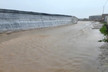
Much of the northeast of South Africa is underwater, and today the South African Weather Service (SAWS) raised its flood warning to its highest level. The Kruger National Park is inaccessible due to the floods, with water stretching from horizon to horizon.
"Due to the combination of very high amounts of rainfall already accumulated over the past several days, and the expectation of further heavy rainfall, the risk of widespread flooding remains critically high," according to SAWS.
Many Limpopo and Mpumalanga districts have, since October, had double the amount of rainfall they'd had during the previous twelve months. Ongoing weather disruptions are preventing the effective harvesting and export of mangoes and lemons. This is already having a direct impact on current market supply, which could lead to delays in fulfilling export commitments.
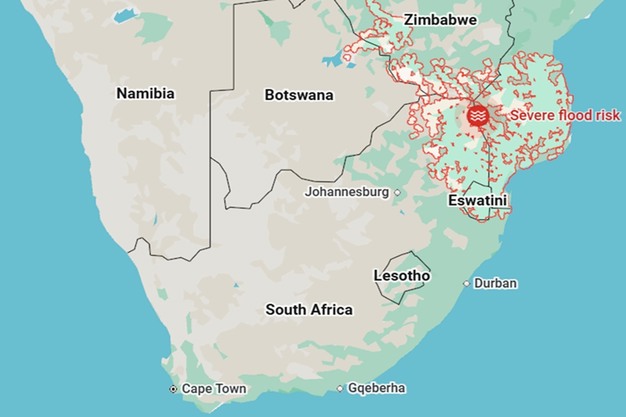 © Google Maps The astounding extent of the flooding across borders
Mango, banana and papaya harvests held up
A banana farmer says he is holding his breath: pump houses and fields are underwater, there's nothing but to wait. In any case, roads have been washed away, and every single river in the entire region is in flood.
"Guys who haven't yet finished picking Tommy Atkins share the same headaches," says the chair of the South African Mango Growers Association, Jaco Fivaz. "There will be losses because we can't get to the fruit. Little fruit will be coming out of Hoedspruit this week, and the mango harvest is set back by at least five to six days."
Mangoes are a problem, says another grower whose litchi crop is fortunately done. "Lots of mangoes left in the orchard, full-on flooding everywhere. Huge rain, all the rivers are full, dams are full, pump houses are underwater."
It's looking ominous at this stage, he continues. "Mangoes and bananas and pawpaws [papayas], they're all being held up."
Farmers are jumping at the least dry spell to rush into orchards to pick fruit either off the tree or off the ground, for juicing purposes. "The probability of quality issues increases; it's not good for fruit to remain wet for so long. Water has the tendency to accentuate marks on a fruit's skin, making a class 1 fruit look like a class 2 or 3."
A large part of South Africa's mango, litchi, soft citrus, and Valencia orchards are in this broad swathe under water – the South African Weather Service says the city of Mbombela (Nelspruit) is affected, along with the greater Tzaneen, Giyani, and Letaba areas, and the municipalities of Nkomazi (comprising Komatipoort), Maruleng, and Ba-Phalaborwa by critical flooding.
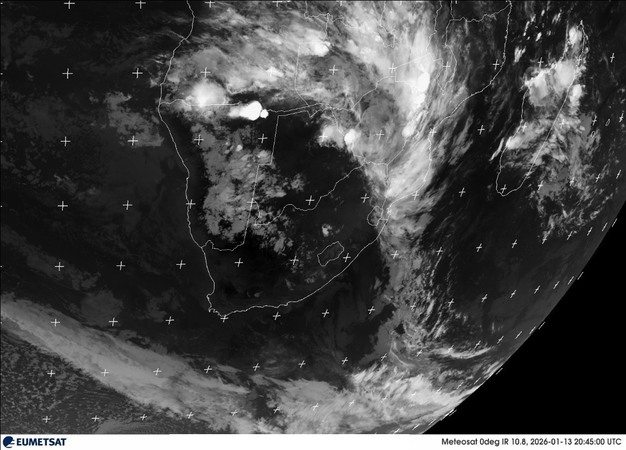 © EUMETSAT
Satellite image taken during torrential rain on the evening of 13 January 2026
Citrus impact
The early lemon harvest, much of it for exports, from the very north of the country, is affected by the floods.
"The situation has not yet escalated into a direct operational risk for our business," says Diederik Fourie, operational manager for northern South Africa at Indigo Farming, production and packaging division of ANB Investments. "Mandarins have entered the stage of internal quality development. Prolonged heavy rainfall may reduce acidity levels if orchards do not receive adequate drainage before harvest."
Days of grey skies and limited sunshine will definitely affect the growth tempo in the orchards, says Jan-Louis Pretorius, CEO of Groep 91 Farming. "It's still very early in the citrus season. If it doesn't continue for much longer, the fruit will still be able to catch up."
Weather conditions are expected to gradually improve from around 19 January 2026, and more stable conditions are expected from 20 January 2026 onwards, says the South African Weather Service.
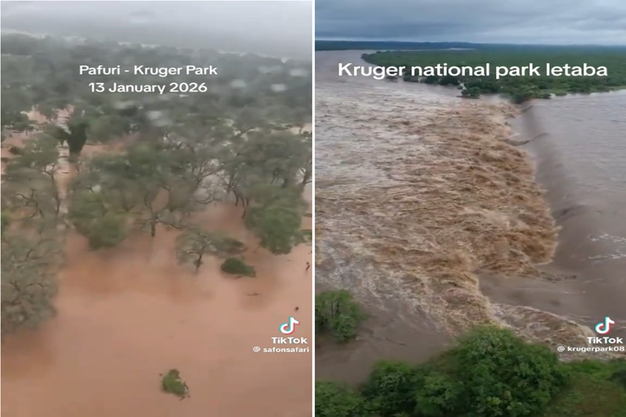 © TikTok @safonsafari @krugerpark08 Screen grabs from the TikTok videos of the Kruger National Park, closed for visitors, inundated after prolonged heavy rains (@safonsafari and @krugerpark08)