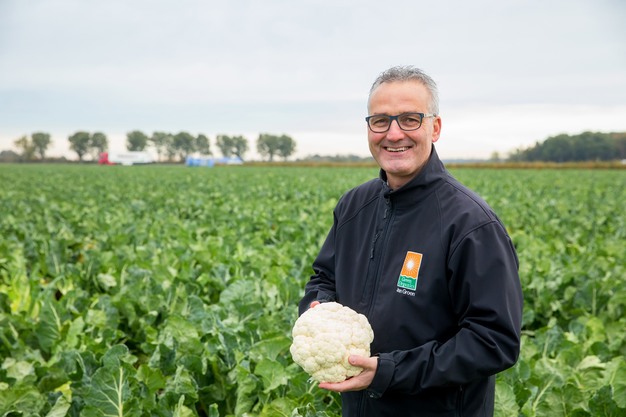
After Green Organics' 25th anniversary year, Jan Groen will enter his 40th year in the fresh produce trade in 2026. A moment to look back and ahead with the organic entrepreneur ("I even have my surname right"). "Everyone has their highs and lows, and I have not been spared either over the past year. The death of my comrade and associate, Ruben Bringsken, for example, was an absolute low. He was a year younger than me. That is certainly a wake-up call," Jan says.
For his group of companies, which now includes seven food companies under the Green Organics Group, the entrepreneur looks back on the past year with satisfaction. "It was a successful year for us. Dry years are often favourable for organic farming, and we were able to place all planned volumes. Of course, it helps that we sell our crops before sowing and planting," Jan observes calmly.
 © Green Organics
Confidence
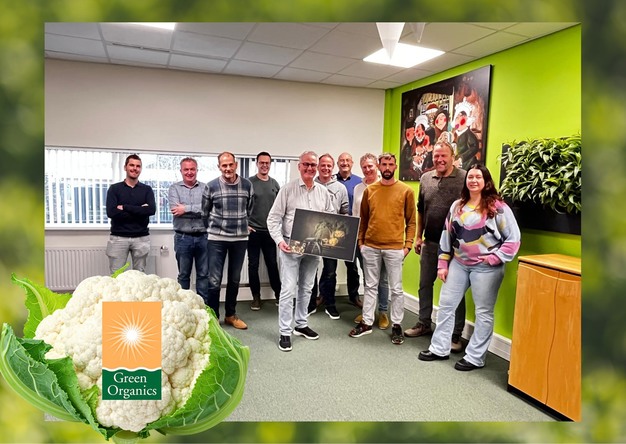
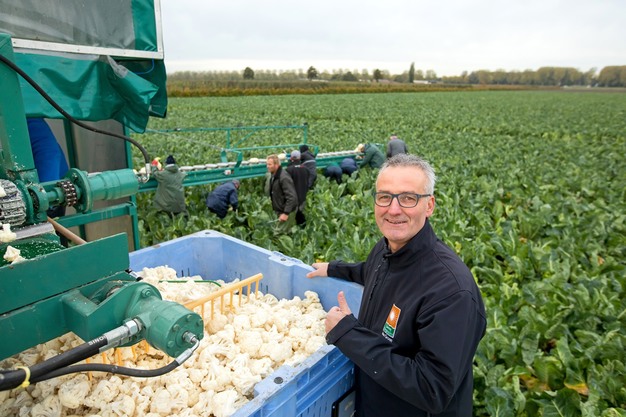
"Green Organics' strength lies in serving the full breadth of the market, across fresh, industrial, and frozen segments. In particular, our frozen business unit has achieved a substantial increase," Jan says. "What also helps is that we operate 100% organic. There are companies with mixed portfolios that are currently under considerable pressure, but we enjoy a high level of confidence because of our way of working. I partly attribute that to our private cooperative structure, in which we even have a board of six growers who have a say. We truly do this together with our growers. This year, for example, we evaluated the 21st harvest with our industrial cauliflower group. When each of them then praises the cooperation, that really gives me goose bumps. For me, that is the cherry on top of the cauliflower cake."
 © Green Organics
Where Green Organics started in Flevoland and expanded nationwide from there, the group's sourcing network now covers a 300-kilometre radius around Dronten. "That means we grow as far as Bremen, Hanover, and Cologne, and we have expanded further into Belgium and northern France. This geographical spread is necessary to cope with climate extremes," Jan says. "Ahead of the import season, I used to be a strong supporter of Spain, but in recent years, we have seen increasing continuity issues with Spanish imports as a result of climate change. From Fruit Logistica 2022 onwards, we therefore focused more on Italy, which has worked out well for us. Incidentally, we apply the same principles to our foreign suppliers. We know them all personally and are not active in purely trading structures. In recent years, the import period from late March to mid-June has generally become more important, although in 2025 this was less the case because sufficient product was available locally across the board."
This did not apply to all products. "We are also active in sweetcorn processing, and those volumes were more challenging. On the other hand, the quality of the sweetcorn kernels was very good. With our subsidiary Green Ways, we made major investment rounds in both 2018 and 2021, and the sweetcorn processing business is now benefitting from those investments. If we had to make them today, they would be twice as expensive," Jan says. "Fortunately, by tightly organising the entire operation from front to back, we are able to operate very close to the edge. In that sense, we have been Lean & Mean for more than 25 years."
Local cultivation and sales
Green Organics' sales have been strongly focused on the Dutch market since its inception. "Our vision from day one was to grow locally and sell as much as possible locally. The Netherlands accounts for 65% of our sales, but Germany and Scandinavia have traditionally been important markets as well. Belgium is also significant, partly because of its processing industry. The UK has also regained importance. We ourselves do not export outside Europe, in line with our preference for local chains, but we know that some of our customers do re-export."
 © Green Organics
Within the Green Organics assortment, carrots, spinach, peas, green beans, sweetcorn, and onions are the main products. "Red beet is an absolute runner-up, both cooked and fresh. As the switch to fully organic is relatively straightforward for this product, it fits well within retail replacement strategies," Jan explains. He has consistently pursued a broad product spread over the years. "That way, you spread the risks, and things never turn out completely disastrous or exceptionally good. That is why we continue to look at further product diversification."
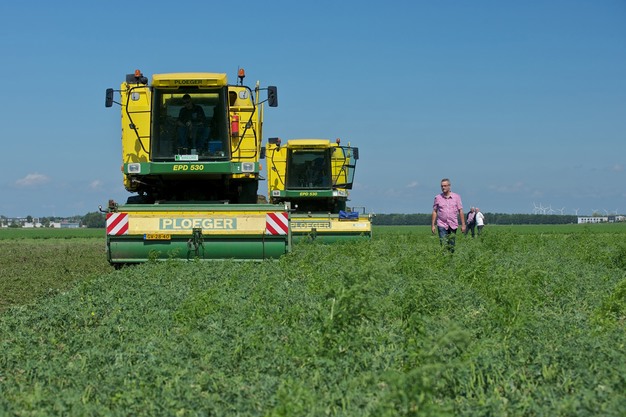
"In our view, it is essential that our customers, whether in retail, processing, or out-of-home, make agreements with primary production. Otherwise, we cannot guarantee continuity. We have a clear vision of long-term cooperation, and I must say that many parties recognise this and are keen to join. I also want to involve our wider partner network. Take Loonbedrijf Breure from Swifterbant, which harvests a significant share of our industrial vegetables, as well as a range of transporters. Their involvement and expertise are very important to us. After all, if trucks are expected at the factory, they must arrive just in time. We operate 24/7, and the reliability we jointly provide largely determines our shared success."
 © Green Organics
That a company such as HAK recently abandoned its ambition to become 100% organic did not come as a surprise to Jan. "The ambition itself was admirable, but in terms of realism, I believe there should have been a stronger focus on chain cooperation. You can only achieve something like that if you work together across the entire chain. You cannot do it on your own. For products that are relatively easy to grow organically, such as beetroot, red cabbage, and spinach, it is feasible, but a farmer grows a wide range of crops. That is why I am proud that last year we were able to deliver on everything we promised both our growers and our customers."
Protein transition
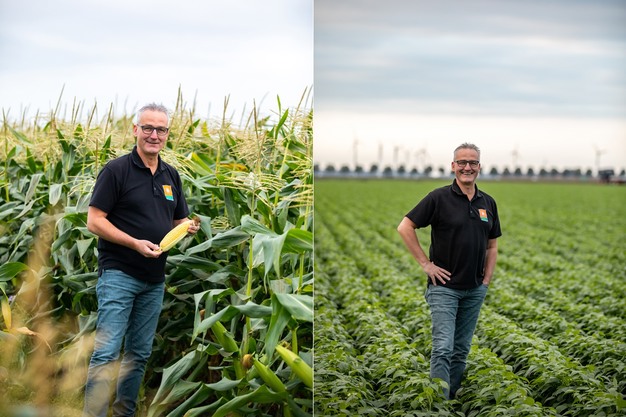
An important trend that Green Organics is building on is the protein transition. "We are, for example, at the forefront of Dutch soybean cultivation," Groen says. "Partly driven by the protein transition ambitions of, among others, the province of Flevoland, we took steps in this direction as early as 2018. For customers with an organic portfolio through us, we also supply conventional soy via our sister company, Dutch Soy, as a service item. Personally, I mainly see this conventional production as a breeding ground for organic cultivation because of the conversion potential. We have three in-house agronomists and crop advisors who guide growers through the conversion process."
"Organic farming is characterised by four core principles: Health, Ecology, Fairness, and Care. It is a great privilege to operate within that framework. Our ambitions are clear, and we get out of bed every day full of energy. I am immensely proud of all the colleagues in our group, from agronomists to the quality department, and from administrative staff to sales teams. I therefore take it as a quiet compliment that, despite a very tight labour market, we have no difficulty filling vacancies. I naturally move within many networks, but when people apply spontaneously or are referred to us for open positions, I see that as a great compliment to our entire organisation."
 © Green Organics
"I may not last another 25 years, but I am certainly far from retirement. Both within my companies and across the sector, there are still plenty of challenges ahead. My biggest ambition remains to further strengthen the sustainability of food chains. We need to move towards an agricultural transition, and that requires strong and innovative chain alliances. I believe in a connected, sustainable world, not in a model of distant buying and selling, but in true partnerships. We should not simply say that things must be done differently, but actively demonstrate how it can be done and prove that alternative models really work. That is what I am happy to continue working on in 2026!"
 For more information:
Green Organics
De Kromme Rijn 1
8253 RG Dronten
+31 (0) 321 385340
[email protected]
www.greenorganics.nl