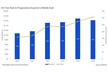
In January–November 2025, Georgia imported 3,056 tonnes of walnuts worth USD 13.1 million, according to bm.ge. This represents an increase of 11.2% in volume and 22.4% in value compared with the same period in 2024, when imports totaled 2,746 tonnes valued at USD 10.7 million. The figures cover shelled, fresh, and dried walnuts.
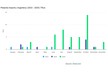
China remained the largest supplier, delivering 1,807 tonnes valued at USD 7.9 million. It was followed by Uzbekistan with 1,042 tonnes worth USD 4.2 million, and Kyrgyzstan with 162 tonnes valued at USD 650,000. Smaller volumes were imported from Chile (20 tonnes, USD 250,000) and Turkey (23 tonnes, USD 96,000). Imports from Ukraine, which were among Georgia's top three suppliers before the full-scale war, have nearly ceased.
At the same time, Georgia's walnut exports declined sharply. In January–November 2025, exports totaled 82 tonnes worth USD 651,000, almost half the volume recorded a year earlier (153 tonnes worth USD 1 million). The main export destinations were Greece (22 tonnes, USD 219,000) and Iran (21 tonnes, USD 210,000), with smaller shipments to Russia, Italy, and Poland.
Walnuts play a significant role in Georgia's food consumption. According to international data, Georgia has the highest per capita walnut consumption globally, averaging 1.04 kg per person per year, around eight times the global average.
Domestic production continues to develop. The 2025 walnut harvest is estimated at around 4,000 tonnes, according to the Georgian Walnut and Almond Association, which is sufficient to cover domestic demand. However, locally produced walnuts are often priced higher than imported alternatives, making exports more attractive for producers, while imports help stabilize supply on the domestic market.
Source: bizzone.info