Washington's tree fruit sector opened the Washington State Tree Fruit Association annual meeting in Wenatchee with discussions centered on oversupply and the need to reduce marketable volumes of apples, cherries, and pears. Industry participants said the state's production capacity remains strong, but current economic pressure requires more controlled growth.
West Mathison, CEO and president of Stemilt Fruit, stated, "In Washington state, we do have a bright future in tree fruit. It really comes down to a supply problem, and a supply problem is a management problem." José Ramirez, an organic grower near Royal City, said growers need to be more selective. "We have too much right now, so (orchards) need to cut what doesn't make you money," he said.
Washington State Tree Fruit Association President Jon DeVaney outlined regulatory and cost developments, including recent changes to H-2A wages and housing allowances. He said upcoming state budget constraints and legislative proposals could add financial pressure. He encouraged growers to participate in advocacy efforts, including the upcoming Tree Fruit Day in Olympia.
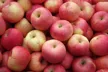
A large portion of the conference focused on apple variety management and export market alignment. Mathison noted that the most exportable varieties remain Fuji, Golden Delicious, and Red Delicious, which together have fallen from about 50 per cent of Washington's production in 2014 to under 30 per cent in 2024. Domestic plantings continue to shift toward Honeycrisp, Cosmic Crisp, and Pink Lady. Gala remains the leading variety at 18 per cent, followed by Honeycrisp at 15 per cent, Granny Smith at 14.7 per cent, and Red Delicious at 12 per cent.
Mathison said that newer varieties often require higher wholesale prices to break even, about US$35 per box, while the traditional export-oriented varieties are "value prices" around US$25 per box. He expects Pink Lady to increase in importance due to Washington's comparative advantage in producing the variety.
Speakers also discussed reducing harvested volume through tighter grade management and culling. Yakima Valley horticulturist Adam Zediker described training crews by leaving cull apples on each row. Gilbert Plath of Washington Fruit said pruning and selective picking remain priorities. Mathison said the industry must reduce fresh volume to below 125 million boxes. "We must get below 125 million fresh boxes — by choice or by force," he said.
The original projection for the 2025 crop was 142 million 40-pound boxes, but as of 1 December, the estimate is 131.5 million boxes. Mathison and DeVaney said the 2025 crop may represent the market low point, though Mathison noted that 2026 may not improve. He added, "We anticipate large (amounts) of orchard removal after the 2025 crop. We haven't seen the big acreage removal yet."
Source: Yakima Herald-Republic