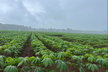
Vegetable demand in Sri Lanka has fallen sharply in the period immediately after Cyclone Ditwah, according to a regional agricultural official who briefed President Anura Kumara Dissanayake during a visit to the Nuwara Eliya District. Prices initially rose when roads were blocked, but then declined as supply channels reopened and demand weakened.
The Deputy Director of the Department of Agriculture for Nuwara Eliya reported that 1,421 hectares of vegetables were damaged by flooding. The seasonal target was 8,085 hectares, although vegetable cultivation is continuous throughout the year, with about 6,000 hectares typically in production. He stated that "about 20 per cent to 30 per cent is damaged."
Daily shipments illustrate the decline in demand. "Yesterday, 72,000 kilos left the area. In a normal day, it is about 150,000 kilos," the Deputy Director said in a video carried by Sri Lanka Mirror. He noted that retail markets in lower areas were not fully open, which reduced buying activity. As a result, "Today carrot was 200 (rupees a kilo), leeks were 200 and cabbage was 130 as I recall," equal to roughly US$0.55, US$0.55, and US$0.36 per kilo. "We have a big supply, but there are no sales down below."
President Dissanayake asked whether transport issues were limiting the movement of goods to other regions. The Deputy Director said transport had normalized and that the situation differed from the Dambulla economic centre, where produce is handled through auction-style commission agent systems.
He added that vegetable prices usually rise in December and January, and again in June and July. "This is the period when vegetable prices should go up, but it is now at normal levels," he said.
The Disaster Management Centre reported that about 611,000 families, or close to 2 million people, were affected by the cyclone as of December 08. Many households were displaced or cleaning damaged homes. Domestic tourism had paused, foreign tourism was down 20 per cent year on year, and many people were focused on supplying relief materials.
Most village pola markets were not operating in the immediate aftermath, and consumers were not visiting towns to purchase goods, according to other agricultural sector officials. They noted that conditions may shift as daily life resumes. Several retail sectors also reported reduced sales, although dry rations and bottled water sold out in supermarkets as they were purchased for relief distribution.
Source: EconomyNext