The start of the potato planting season is approaching in the Spanish region of Andalusia with very different prospects to those of last season. The European potato market is completely saturated mainly due to the drastic reduction in production in large frozen potato factories in northern Europe, especially those producing French fries.
"This slowdown is fundamentally a result of the aggressive trade policy of the United States and the depreciation of the dollar against the euro, as well as the imposition of a series of tariffs that have pushed many of these large factories out of the market," says Javier Boceta, Director of Meijer Potato Ibérica.
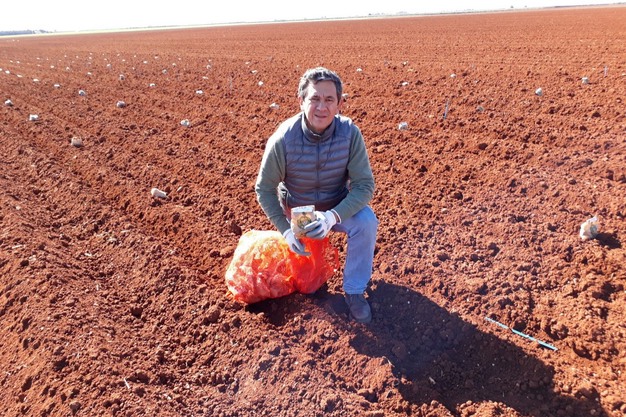
"At the same time, China and India, two giants with great freedom in the use of phytosanitary products and lower labor costs, have recently burst into this market. Furthermore, we cannot forget the impact of the Common Agricultural Policy, which has brought many limitations to the use of phytosanitary products and increased the production cost of seed and ware potatoes across Europe," says Boceta.
"Therefore, we must be extremely cautious with potato plantings this season in Seville. That doesn't mean we should stop growing potatoes, as it's mainly a temporary situation, and in fact, the trend of declining acreage seems to already be behind us. It is simply a temporary blip that will surely have been solved by next season," he says.
"Last season, many factories in northern Europe were still bound by previously made production agreements, and in view of this slowdown, the market has become saturated, but we can assume that next spring they will contract what the market demands. Therefore, in the coming seasons, there will no longer be this excess supply," says Boceta.
Meijer Potato Ibérica is devoted to research, development and marketing of seed and ware potato varieties. It is working on the improvement of seed potatoes for different markets, such as potatoes for frying, for chips and for fresh consumption in the Spanish and Portuguese markets.
According to the expert, Spanish potato production is much better organized than in the past, with a higher volume of contracts, both with retail chains and with the processing industry.
"Last season, contracting with supermarket chains and Spanish factories worked out well. So this year we will remain increasingly committed to contracting. However, we've had a serious problem with the central markets that usually supply greengrocers and the Horeca channel, among others, which were buying old potatoes of poorer quality at a much cheaper price. That explains the remarkable difference in quality that could be observed during the months of May and June," says the Director of Meijer Potato Ibérica.
"Ahead of the next season, we don't recommend planting potatoes without first securing a contract and an end market. Back in the day, the sector worked actively to coordinate with the large-scale retail and processing factories. Both last year and this year, the changeover to new potatoes has been scheduled to take place as soon as they become available. Today we can say that all supermarket chains are switching to new potatoes as soon as they become available. They put quality before price," says Boceta.
"However, we'll need a change of attitude on the part of central markets. When there is Spanish production available, we should switch to our own product. The surplus from northern Europe has no culinary quality and is destroying our agro-industry and agriculture, as well as causing consumption to fall," says Javier Boceta.
 For more information:
Javier Boceta
Meijer Ibérica
Tel.: +34 954 61 16 26
Tel.: +34 649 98 21 59
[email protected]
www.meijerpotato.com/es/