At the end of 2024 and the beginning of 2025, heavy rains in Costa Rica had a notable impact on pineapple production. This has resulted in a limited supply throughout the year, which is also expected to affect the Christmas campaign, when demand increases and supply could be insufficient to cover the market's needs.
"In the Spanish market, the pineapple supply has been affected the entire year by the situation of the production in Costa Rica," says Patricia Antón, Head of Imports at Cultivar. "During the summer, the market was affected by the natural flowering of pineapples, a physiological process that results in a greater supply of fruit in a short period of time. This led to a temporary oversupply and downward pressure on prices," he says.
"Subsequently, after the summer months, the situation improved thanks to a reduction in the supply, which allowed the market to stabilize. However, in October and early November, there has been a slowdown in market activity as a result of a slight increase in volumes and a lower demand," says Antón.
Volumes will continue to be limited in the run-up to the Christmas season, so the market could become tense again, and prices are bound to recover during the last month of the year. "The Christmas season is looking particularly challenging, both because of the scarcity of fruit and because of the logistical challenges involved in guaranteeing the timely arrival of containers from Costa Rica," says Antón. "The sector is confident that there will be no incidents in maritime transport that could cause delays in arrivals and affect the supply during one of the most demanding periods of the year."
Currently, Cultivar is selling pineapples mainly from Costa Rica, "which is still the biggest supplier by far, with excellent quality, flavor, and availability all year round," says Cultivar's import manager. "Although other countries such as Panama, Colombia, and Ecuador are increasing their production, Costa Rica remains the market leader," she says.
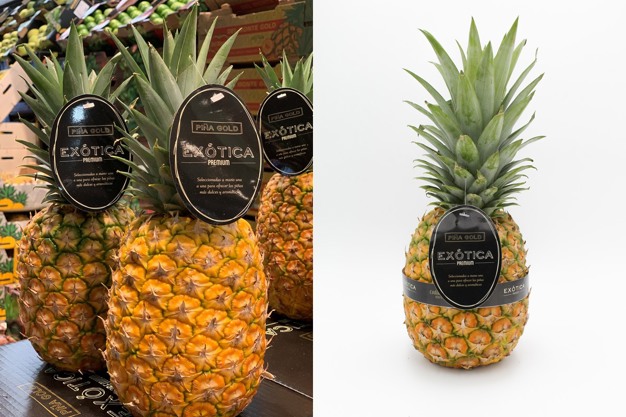
In terms of distribution, the trend is increasingly clear: "colored" pineapples have gained a dominant position compared to green pineapples, which continue to lose ground on the shelves and in consumer preferences, according to Antón.
"Colored pineapple, with its more attractive appearance and optimum ripening, is better adapted to the market's current demands and the sales strategies of retail chains, which are looking for a visually more appealing product with a quick turnover. This change in preferences has led operators to adjust their supply and logistical planning to focus more on colored pineapples, thus consolidating their role as the predominant variety in the main European markets."
With an annual volume of around 7,000 tons, Cultivar distributes its pineapples mainly via large-scale retail, which continues to be the channel with the highest growth and demand. "However, we are still present in the wholesale market. That remains a relevant part of our sales strategy," says Patricia Antón. For more information:
Patricia Antón
Cultivar
Longitudinal 9 n.º 30
08040 Barcelona. Spain
Tel.: +34 911 44 10 80
[email protected]
www.cultivar.net